
Anka BYNC1-M vs Remta R20: Footprint and Fit
We compare the Anka BYNC1-M and Remta R20 Deluxe tea makers to see which fits your counter.
The Anka BYNC1-M is the only choice for counters under 365 mm wide. It offers a tighter 220 mm footprint. The Remta R20 requires full width and more height. Choose Anka for tight spaces. Choose Remta for slightly more capacity if you have the room.
Products compared
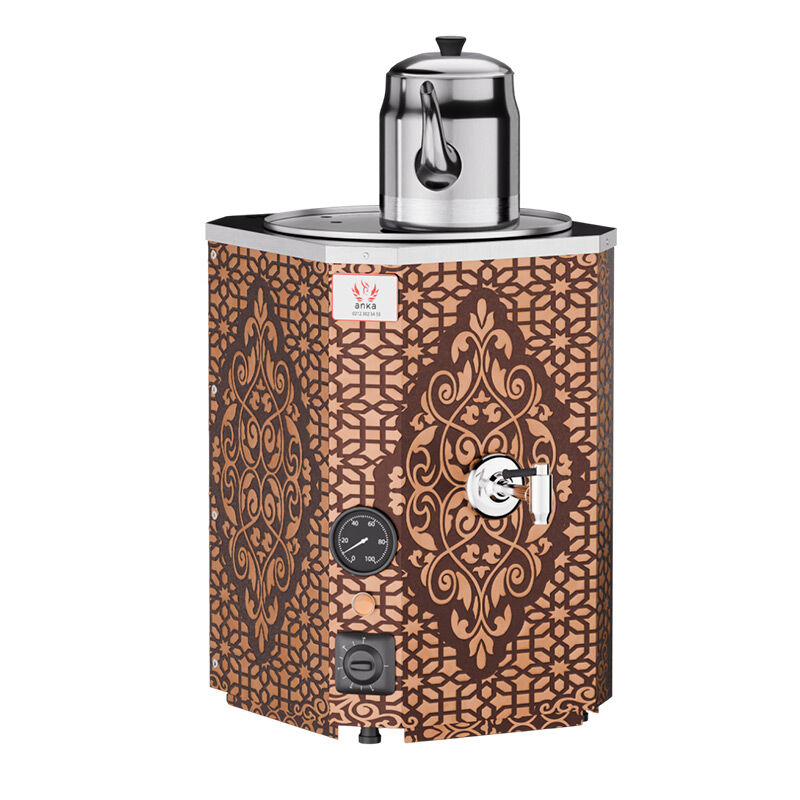
Product A
Anka BYNC1-M New Generation Mini Tea Maker, 1 Teapot, 5 L
The Anka BYNC1-M is a compact electric tea maker with a 5-liter capacity and one teapot. It features a stainless steel tank, temperature control, and energy-efficient design for small-scale tea service.
- Power Source
- Electric
- Voltage
- 220 V
- Power
- 1500 W
- Width
- 220 mm
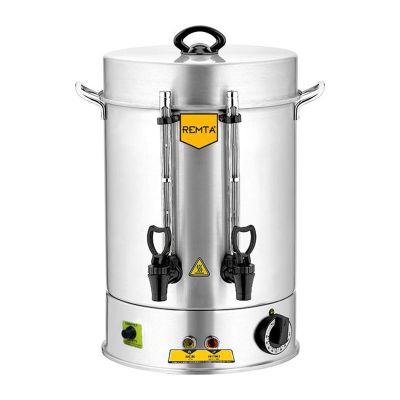
Product B
Remta R20 Deluxe Tea Maker, 7 L
The Remta R20 Deluxe Tea Maker offers 7 liters of tea capacity, ideal for small commercial operations. It features stainless steel construction and automatic temperature control.
- Power Source
- Electric
- Voltage
- 220 V
- Power
- 1200 W
- Width
- 365 mm
On this page
- The two machines
- What actually separates them
- The space math
- Utilities and installation
- What the spec sheet hides
- Doors, drawers and service access
- Which kitchen each one fits
- Where they differ
- Strengths and weak spots
- Which one for which kitchen?
- A cocktail bar
- A juice or smoothie counter
- A hotel minibar or room service
- Before you order
- Our call
- Questions we get asked
- Which tea maker is better for a small café?
- Does the Remta R20 Deluxe require a drain?
- Can the Anka BYNC1-M fit under a standard hood?
- Related comparisons
The two machines
| Product | Brand | Category | Key specs | |
|---|---|---|---|---|
| A | Anka BYNC1-M New Generation Mini Tea Maker, 1 Teapot, 5 L | Anka | Tea Machines | Power Source: Electric; Voltage: 220 V; Power: 1500 W |
| B | Remta R20 Deluxe Tea Maker, 7 L | Remta | Tea Machines | Power Source: Electric; Voltage: 220 V; Power: 1200 W |
What actually separates them
A busy morning rush in a small café often reveals the true cost of equipment choices. Operators frequently discover that a machine fitting on paper simply does not work in practice. The space between the wall, the hood, and the adjacent fridge is rarely generous. You need to know if a tea maker will block access or violate clearance rules before you spend money.
We rely entirely on manufacturer spec sheets and published specifications.
The space math
The Anka BYNC1-M claims a 220 mm width and 250 mm depth. This creates a footprint of 0.055 m². The Remta R20 Deluxe is significantly wider at 365 mm and slightly deeper at 275 mm. Its footprint totals 0.100 m². The Remta requires nearly double the counter space of the Anka.
Height differences are even more critical for installation. The Anka stands at 300 mm, while the Remta reaches 410 mm. If you have low shelving, the Remta might not fit under the cabinet. The Anka’s lower profile allows it to slide under most standard overhead fixtures. You must measure your vertical clearance before ordering.
Utilities and installation
Power demands differ between the two units. The Anka BYNC1-M draws 1500 W, while the Remta R20 Deluxe uses 1200 W. The Anka’s higher wattage might require a dedicated circuit in older kitchens. Both units operate on 220 V. You should verify your panel capacity before connecting the Anka.
Neither machine requires a permanent drain connection. They are countertop units that rely on gravity dispensing. The Remta R20 Deluxe weighs 3 kg, making it lighter and easier to move than the Anka BYNC1-M, which weighs 5 kg. This weight difference matters if you need to clean behind the unit frequently.
What the spec sheet hides
The spec sheets do not list noise levels or exact energy consumption per brew. We can estimate annual energy use based on nameplate power. Assuming 8 hours daily operation for 300 days, the Anka uses 3,600 kWh/year. The Remta uses 2,880 kWh/year under the same assumptions.
These figures are theoretical maximums. Real-world usage involves lower duty cycles. The Anka’s higher power density (90.9 kW/m³) compared to the Remta (29.2 kW/m³) suggests it heats faster but may cycle more intensely. You should check if your local regulations require specific ventilation for these electric units.
Doors, drawers and service access
Both machines are single-jug units with simple gravity dispensing. The Anka BYNC1-M has removable top lid for easy cleaning. This design allows you to access the tank directly. The Remta R20 Deluxe includes level indicators for water and tea, which helps prevent dry burning.
Service access is limited by their compact design. You cannot easily slide them out for deep cleaning without disconnecting power. The Remta’s insulated handles prevent burns during service. The Anka’s non-slip base ensures stability. You must ensure you have at least 50 mm of clearance at the back for cord management.
Which kitchen each one fits
The Anka BYNC1-M is ideal for tight spaces. Its 220 mm width fits in narrow alcoves or small prep areas. It is suitable for cafes with limited counter space. The Remta R20 Deluxe needs a full 365 mm run. It is better for open counters where space is not a constraint.
Consider your service style. If you serve tea in small batches, the Anka’s 5 L capacity is sufficient. The Remta’s 7 L capacity supports higher volume. However, the Remta’s 410 mm height may clash with low hoods. Match the machine to your physical constraints, not just your volume needs.
Where they differ
| Specification | A | B | What it changes in practice |
|---|---|---|---|
| Width | 220 mm | 365 mm | The Remta requires significantly more counter space, potentially blocking workflow in small kitchens. |
| Height | 300 mm | 410 mm | The Remta may not fit under low shelves or hoods, limiting installation options. |
| Power | 1500 W | 1200 W | The Anka draws more power, which may require a dedicated circuit in older electrical systems. |
| Weight | 5 kg | 3 kg | The Remta is lighter and easier to move for cleaning, while the Anka is heavier. |
Strengths and weak spots
| Strengths | Limitations | |
|---|---|---|
| A | - Compact 220 mm width fits tight spaces. - Lower 300 mm height fits under most shelves. |
- Higher 1500 W power draw may strain older circuits. - Skip it if you need more than 5 L capacity or have limited electrical capacity. |
| B | - Lighter 3 kg weight makes it easier to move. - Larger 7 L capacity supports higher volume service. |
- Wide 365 mm footprint requires significant counter space. - Avoid this if you have low overhead clearance, as it is 410 mm tall. |
Which one for which kitchen?
A cocktail bar
Cocktail bars often have limited space behind the well. The Anka BYNC1-M’s narrow 220 mm width allows it to fit in tight spots without blocking bartender movement. The Remta R20 Deluxe is too wide for most well areas.
Pick: Anka BYNC1-M New Generation Mini Tea Maker, 1 Teapot, 5 L
A juice or smoothie counter
Juice counters prioritize speed and hygiene. The Remta R20 Deluxe’s 7 L capacity and level indicators are useful for steady demand. However, its width might interfere with prep areas. The Anka’s smaller size is safer for narrow counters.
Pick: Anka BYNC1-M New Generation Mini Tea Maker, 1 Teapot, 5 L
A hotel minibar or room service
Hotel minibars need quiet, compact units. The Remta R20 Deluxe’s 3 kg weight and 7 L capacity are good for room service carts. The Anka BYNC1-M is also suitable but has less capacity. Both fit well in small hotel kitchens.
Pick: Either
Before you order
- Confirm the supply phase with the dealer before ordering; neither spec sheet states it: Incorrect phase can damage the unit or void the warranty.
- Verify local ventilation requirements for electric tea brewers: Some jurisdictions require specific airflow for high-wattage appliances.
- Check the warranty terms for both units: Warranty coverage varies by region and may affect long-term costs.
- Measure your actual counter depth, not just width: The Remta’s 275 mm depth plus cord clearance may exceed standard counter depths.
- Confirm if a dedicated circuit is available for the Anka’s 1500 W load: Overloading a circuit can cause tripping or fire hazards.
Our call
The Anka BYNC1-M is the superior choice for operators with limited counter space. Its 220 mm width and 300 mm height allow it to fit in tight spots where the Remta R20 Deluxe simply cannot go. The Remta offers more capacity and is lighter, but its 365 mm width and 410 mm height are significant constraints. If your kitchen is cramped, the Anka is the only viable option. If you have ample space and need higher volume, the Remta is a solid alternative. Always verify your electrical and clearance requirements before purchasing.
Questions we get asked
Which tea maker is better for a small café?
The Anka BYNC1-M is better for small cafés due to its compact 220 mm width and lower height, fitting easily into tight spaces.
Does the Remta R20 Deluxe require a drain?
No, the Remta R20 Deluxe is a countertop unit with gravity dispensing and does not require a permanent drain connection.
Can the Anka BYNC1-M fit under a standard hood?
Yes, the Anka BYNC1-M is only 300 mm tall, making it suitable for most standard overhead hoods and shelves.
Related comparisons
FindGastro Editorial · Commercial kitchen equipment editors
Author profile →