
Anka EPE2 vs Remta R53 Maxi: Footprint Battle for Tea Stations
We compare the compact Anka EPE2 and the wider Remta R53 Maxi tea makers. Their dimensions dictate where they fit in your kitchen layout.
Choose the Anka EPE2 if your counter run is under 500 mm wide. The Remta R53 Maxi requires a full 500 mm width and 670 mm height clearance. The Anka fits tighter spaces, while the Remta offers a lower weight profile despite its larger footprint.
Products compared
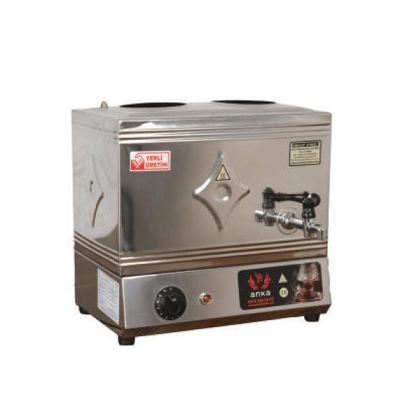
Product A
Anka EPE2 Eco Stainless Steel 2 Teapot Tea Maker, 24 L, Electric
Large-capacity electric tea maker with a 24-liter stainless steel reservoir. Designed for commercial use with energy efficiency and compact design.
- Power Source
- Electric
- Voltage
- 220 V
- Power
- 2000 W
- Width
- 330 mm
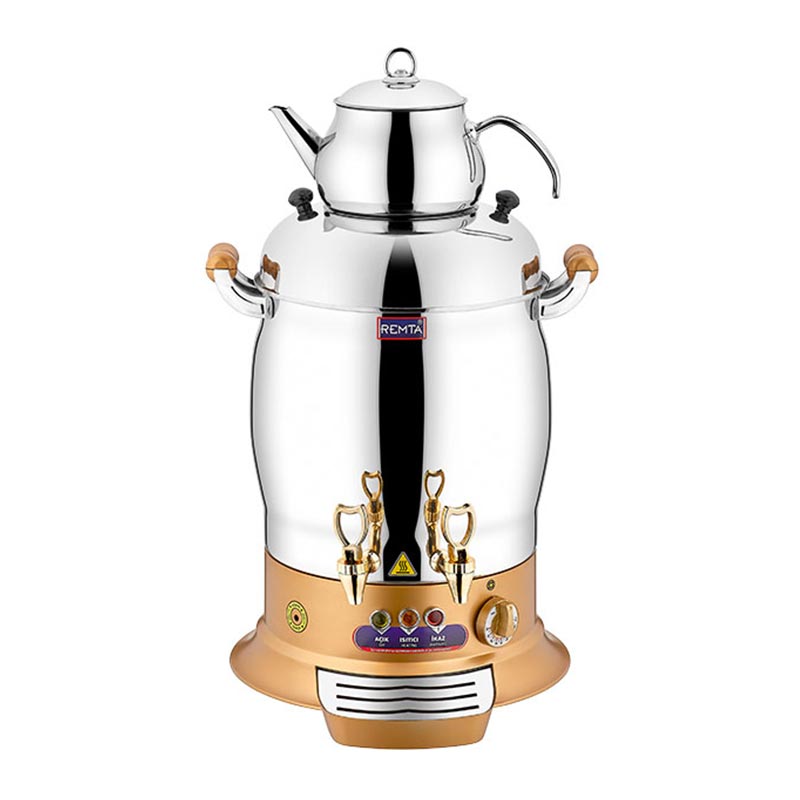
Product B
Remta R53 Maxi Tea Maker, 23 L, Gold
The Remta R53 Maxi Tea Maker offers 23 liters of capacity with dual teapots and a gold finish. It features automatic temperature control and insulated handles for safe handling.
- Power Source
- Electric
- Voltage
- 220 V
- Power
- 2200 W
- Width
- 500 mm
On this page
- The two machines
- What actually separates them
- The space math
- Doors, drawers and service access
- Utilities and installation
- Which kitchen each one fits
- Where they differ
- Strengths and weak spots
- Which one for which kitchen?
- A cocktail bar
- A juice or smoothie counter
- A hotel minibar or room service
- Before you order
- Our call
- Questions we get asked
- Which tea machine is better for a small cafe?
- Does the Remta R53 Maxi require a special electrical outlet?
- Can I place the Remta R53 Maxi under a standard shelf?
- Related comparisons
The two machines
| Product | Brand | Category | Key specs | |
|---|---|---|---|---|
| A | Anka EPE2 Eco Stainless Steel 2 Teapot Tea Maker, 24 L, Electric | Anka | Tea Machines | Power Source: Electric; Voltage: 220 V; Power: 2000 W |
| B | Remta R53 Maxi Tea Maker, 23 L, Gold | Remta | Tea Machines | Power Source: Electric; Voltage: 220 V; Power: 2200 W |
What actually separates them
A busy morning rush demands reliable tea production without cluttering the pass. You have limited counter space and need a machine that delivers volume without dominating the workflow. The choice between a compact unit and a larger capacity model often comes down to physical constraints rather than just brew speed.
Both offer double-teapot systems for high-volume service. However, their physical footprints differ significantly. One is designed for tight corners, while the other prioritizes capacity in open layouts. Understanding these spatial differences is critical for installation.
The space math
The Anka EPE2 measures 330 mm wide by 360 mm deep, creating a footprint of 0.1 m². This narrow profile allows it to slide into tight gaps between other equipment. In contrast, the Remta R53 Maxi spans 500 mm in width and 405 mm in depth, occupying 0.2 m² of floor space. The Remta is significantly wider, requiring a dedicated section of counter.
Height clearance is another critical factor. The Anka stands at 550 mm, making it easy to place under standard shelves or low hoods. The Remta reaches 670 mm, which may conflict with overhead storage or ventilation ducts. If your kitchen has low ceilings or fixed overhead cabinets, the Remta’s extra height could be a dealbreaker for installation.
Doors, drawers and service access
Moving the Anka EPE2 is manageable for one person due to its 9 kg net weight. The Remta R53 Maxi is lighter at 6.5 kg, despite its larger frame. This weight difference suggests the Remta uses thinner materials or less internal mass. However, the Remta’s wider base makes it harder to maneuver through narrow doorways or tight service corridors compared to the Anka’s compact form.
Cleaning access differs based on the machine’s stance. The Anka’s compact design allows staff to wipe down the surrounding counter area easily without reaching over a large unit. The Remta’s 500 mm width blocks more of the workspace, requiring staff to work around it. If your kitchen layout requires frequent reconfiguration, the Anka’s smaller footprint offers greater flexibility for daily cleaning routines.
Utilities and installation
Power requirements vary between the two units. The Anka EPE2 draws 2.0 kW at 220V, while the Remta R53 Maxi requires 2.2 kW at the same voltage. This 200 W difference is negligible for circuit loading but indicates the Remta heats water slightly faster. Both units operate on standard single-phase power, simplifying electrical planning for most commercial kitchens without specialized high-voltage lines.
Water capacity is nearly identical, with the Anka holding 24 liters and the Remta 23 liters. This 1-liter difference is irrelevant for service volume. However, the Anka’s welded 304-grade stainless steel tank ensures durability in high-use environments. The Remta also uses 304 stainless steel but adds automatic temperature control, which may reduce energy waste during idle periods compared to the Anka’s simpler heating system.
Which kitchen each one fits
The Anka EPE2 is ideal for small cafes or hotel minibars with limited counter space. Its 330 mm width allows it to fit on standard prep tables without obstructing workflow. The Remta R53 Maxi suits larger catering operations or hotel buffets where space is abundant. Its 23-liter capacity supports continuous service for high-traffic venues, provided there is a dedicated 500 mm wide station.
For juice counters or cocktail bars, the Anka’s compact size is advantageous. It leaves more room for other equipment like blenders or ice machines. The Remta’s larger footprint may crowd the workspace, making it less suitable for high-density beverage stations. If your menu focuses on tea as a primary offering, the Remta’s capacity is beneficial, but only if you have the physical space to accommodate it.
Where they differ
| Specification | A | B | What it changes in practice |
|---|---|---|---|
| Width | 330 mm | 500 mm | Determines if the machine fits on standard narrow counters or requires a dedicated wide station. |
| Height | 550 mm | 670 mm | Affects clearance under shelves or hoods; the Remta may not fit in low-ceiling areas. |
| Weight | 9 kg | 6.5 kg | The Remta is lighter to lift, but the Anka’s compact shape is easier to maneuver through tight spaces. |
| Power | 2.0 kW | 2.2 kW | The Remta has a higher connected load, potentially heating water faster but drawing more current. |
Strengths and weak spots
| Strengths | Limitations | |
|---|---|---|
| A | - Compact 330 mm width fits tight counters and narrow doorways. - Lower 550 mm height fits under standard shelves and hoods. |
- Skip it if you need a machine that is lighter than 7 kg for frequent relocation. - Simpler heating system lacks the automatic temperature control found in the Remta. |
| B | - Lighter 6.5 kg weight makes it easier to lift and carry. - Automatic temperature control system may reduce energy waste during idle periods. |
- Skip it if your counter width is less than 500 mm or overhead clearance is under 670 mm. - Larger footprint occupies 0.2 m², crowding small workspaces and limiting access to surrounding counters. |
Which one for which kitchen?
A cocktail bar
Speed at the well, cleaning between drinks and noise near the guest. The Anka EPE2’s compact 330 mm width allows it to sit discreetly behind the bar without obstructing bartender movement. Its 9 kg weight is stable on the counter, reducing vibration during operation. The Remta’s 500 mm width would crowd the well, making drink preparation difficult. The Anka is the clear choice for tight bar layouts.
Pick: Anka EPE2 Eco Stainless Steel 2 Teapot Tea Maker, 24 L, Electric
A juice or smoothie counter
Prep volume, pulp control and a menu built around fresh fruit. Space is at a premium here, with blenders and cutters already occupying the counter. The Anka EPE2’s 360 mm depth leaves room for prep bowls and fruit bins. The Remta’s 405 mm depth and 500 mm width would consume too much of the limited workspace. The Anka’s compact form factor is essential for maintaining an efficient prep flow.
Pick: Anka EPE2 Eco Stainless Steel 2 Teapot Tea Maker, 24 L, Electric
A hotel minibar or room service
Small batches, quiet operation and staff who use it occasionally. Both machines are suitable for this scenario, but the Remta’s lighter 6.5 kg weight makes it easier for staff to move between floors or storage areas. Its automatic temperature control ensures tea is ready without constant monitoring. The Anka is also a good fit, but the Remta’s ease of handling gives it a slight edge for mobile room service operations.
Pick: Remta R53 Maxi Tea Maker, 23 L, Gold
Before you order
- Confirm the supply phase with the dealer before ordering; neither spec sheet states it: Both units list 220V but do not specify if they are single-phase or three-phase, which affects electrical installation.
- Verify the warranty period with the manufacturer; neither spec sheet lists it: Warranty terms vary by region and dealer, and are critical for long-term maintenance planning.
- Check if a drain is required; neither spec sheet states it: Some tea machines require a drain for cleaning cycles, which impacts plumbing installation.
- Confirm ventilation requirements; neither spec sheet states it: Heat output may require local ventilation, especially in enclosed spaces, to prevent overheating.
- Measure door widths and hallway clearance; neither spec sheet provides shipping dimensions: The machines’ operational dimensions do not guarantee they fit through existing doors or elevators during delivery.
Our call
The Anka EPE2 Eco is the superior choice for kitchens with limited counter space, offering a compact 330 mm width and 550 mm height that fit almost any layout. The Remta R53 Maxi, while lighter and equipped with automatic temperature control, demands a 500 mm wide station and 670 mm of vertical clearance, making it unsuitable for tight spaces. Choose the Anka for flexibility and the Remta only if you have ample room and prioritize automated temperature management.
Questions we get asked
Which tea machine is better for a small cafe?
The Anka EPE2 is better for small cafes due to its 330 mm width and 550 mm height, which fit tight counters and low shelves.
Does the Remta R53 Maxi require a special electrical outlet?
It requires a 220V, 2.2 kW circuit. Confirm the phase with your dealer, as the spec sheet does not specify if it is single or three-phase.
Can I place the Remta R53 Maxi under a standard shelf?
No, the Remta is 670 mm tall, which exceeds the height of most standard shelves. The Anka EPE2 at 550 mm is more suitable.
Related comparisons
FindGastro Editorial · Commercial kitchen equipment editors
Author profile →