
Animo ComBi-Line CB 1x20 R vs KEF Filtronist FLS-6: Energy Trade-off
We compare the 9.2 kW Animo ComBi-Line CB 1x20 R against the 3 kW KEF Filtronist FLS-6 to determine which filter coffee machine actually saves money in a commercial kitchen.
The KEF Filtronist FLS-6 is the clear winner for energy-conscious operators, drawing 3 kW versus the Animo’s 9.2 kW. While the Animo offers a larger 20 L tank, its power draw creates significant heat and cost overhead. Choose the KEF for lower utility bills and easier 220 V installation.
Products compared
Product A
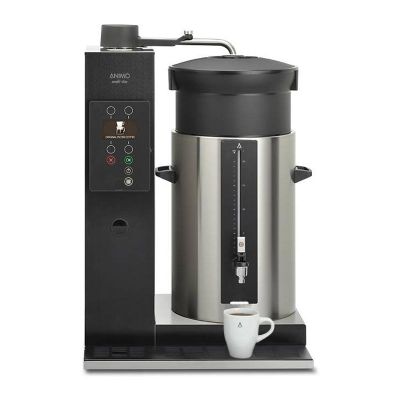
Animo ComBi-Line CB 1x20 R Cylindrical Filter Coffee Machine, 20 L
This commercial filter coffee machine features a 20-liter container and 90 liters per hour output. It includes a digital interface, programmable timer, and durable aluminum casing.
- Power Source
- Electric
- Voltage
- 400 V
- Power
- 9175 W
- Width
- 645 mm
Product B
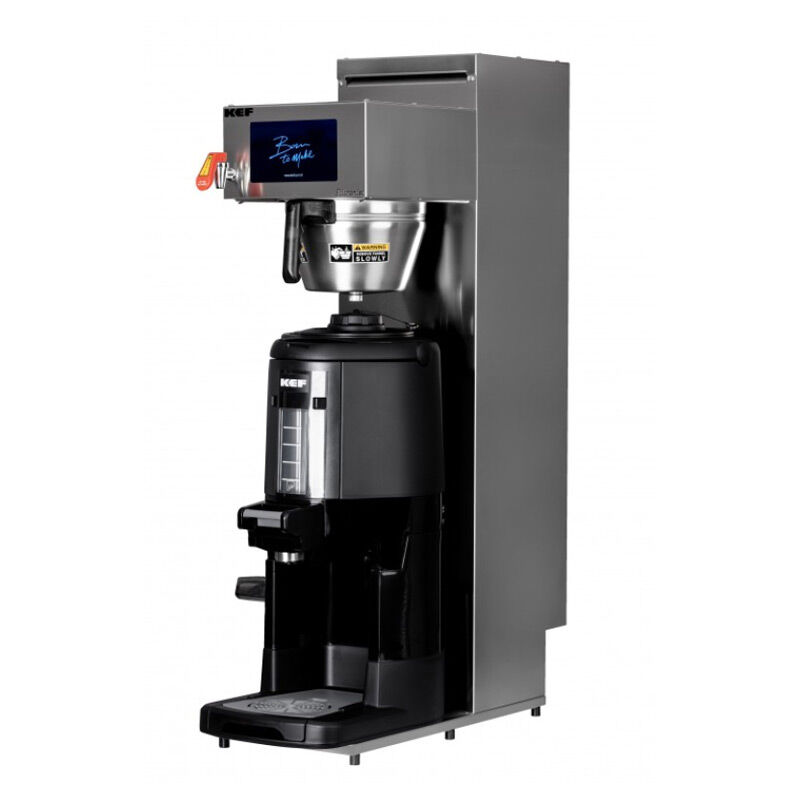
KEF Filtronist FLS-6 Programmable Filter Coffee Machine
High-capacity programmable filter coffee machine with a 7-inch touchscreen and 40 liters per hour output. Features a thermal container, customizable brewing controls, and energy-saving insulation.
- Power Source
- Electric
- Voltage
- 220 V
- Power
- 3000 W
- Width
- 590 mm
On this page
- The two machines
- What actually separates them
- The utility bill angle
- Electrical work and startup
- Efficiency claims vs operating reality
- Heat and ventilation
- Who should pay for efficiency
- Where they differ
- Strengths and weak spots
- Which one for which kitchen?
- A specialty café
- A hotel breakfast service
- A roastery or tasting bar
- Before you order
- Our call
- Questions we get asked
- Can the KEF Filtronist FLS-6 handle large hotel breakfasts?
- Does the Animo ComBi-Line CB 1x20 R require a 3-phase connection?
- Is the KEF Filtronist FLS-6 quieter than the Animo?
- Related comparisons
The two machines
| Product | Brand | Category | Key specs | |
|---|---|---|---|---|
| A | Animo ComBi-Line CB 1x20 R Cylindrical Filter Coffee Machine, 20 L | Animo | Filter Coffee Machines | Power Source: Electric; Voltage: 400 V; Power: 9175 W |
| B | KEF Filtronist FLS-6 Programmable Filter Coffee Machine | KEF | Filter Coffee Machines | Power Source: Electric; Voltage: 220 V; Power: 3000 W |
What actually separates them
Commercial filter coffee machines are often judged by capacity, but their electrical footprint dictates kitchen viability. The Animo ComBi-Line CB 1x20 R demands a 9.2 kW connection, requiring serious infrastructure. In contrast, the KEF Filtronist FLS-6 operates on 3 kW, fitting standard circuits.
The goal is to identify which machine aligns with your site’s electrical constraints and energy budget without compromising service speed.
The utility bill angle
The connected load difference is stark: 9.2 kW for the Animo versus 3 kW for the KEF. This 6.175 kW gap represents the maximum potential draw, not average consumption. However, the Animo’s higher wattage directly impacts your base load and peak demand charges from the utility provider.
Estimated annual energy calculations assume 8 hours daily operation at full nameplate power for 300 days. Under this scenario, the Animo consumes 22,020 kWh, while the KEF uses only 7,200 kWh. This massive disparity highlights the long-term financial impact of choosing high-power equipment.
Electrical work and startup
Voltage compatibility is a critical hurdle. The Animo requires a 400 V supply, typical for heavy industrial equipment, while the KEF operates on 220 V. You must verify your existing circuit breaker and phase configuration before ordering, as retrofitting a 400 V line is costly and disruptive.
The KEF’s 3 kW load on 220 V is far more manageable for most cafes and restaurants. It reduces the need for specialized electricians and allows for simpler installation. This makes the KEF a safer choice for sites with limited electrical infrastructure or older buildings.
Efficiency claims vs operating reality
The Animo’s 20-liter boiler capacity supports a 90 liters per hour brewing rate. This high output requires substantial energy to maintain temperature and recover heat between batches. The KEF, with an 18-liter tank and 40 liters per hour output, prioritizes steady, insulated service over peak speed.
The KEF features insulated water tanks to reduce energy consumption during idle periods. While the Animo uses a double-walled insulated stainless steel boiler, its higher power rating suggests less efficient part-load behavior. The KEF’s pulse brewing and timer mode offer precise control to minimize waste.
Heat and ventilation
A 9.2 kW machine radiates significant ambient heat into the kitchen environment. This excess heat can raise ambient temperatures, forcing air conditioning systems to work harder and increasing overall cooling costs. The Animo’s aluminum front casing may also contribute to heat dissipation.
The KEF’s 3 kW load generates minimal waste heat, making it easier to integrate into compact or poorly ventilated spaces. Its smaller footprint of 0.1 m² also reduces the surface area for heat radiation. This makes the KEF a more comfortable option for staff in tight kitchens.
Who should pay for efficiency
Operators in high-volume settings may justify the Animo’s power for its 90 liters per hour output. However, for most cafes and restaurants, the KEF’s 40 liters per hour is sufficient. The cost of the Animo’s excess capacity often outweighs the benefit of faster brewing speeds.
The decision should hinge on your actual daily volume and electrical constraints. If you have a 400 V supply and need maximum speed, the Animo is viable. Otherwise, the KEF’s energy efficiency and lower installation costs make it the smarter financial choice for most operators.
Where they differ
| Specification | A | B | What it changes in practice |
|---|---|---|---|
| Connected Load | 9.2 kW | 3 kW | The Animo’s higher power draw increases utility costs and requires industrial-grade electrical infrastructure. |
| Voltage | 400 V | 220 V | The KEF fits standard circuits, while the Animo needs a specialized 400 V connection. |
| Brewing Rate | 90 L/h | 40 L/h | The Animo serves larger volumes faster, but the KEF’s rate is sufficient for most cafes. |
| Footprint | 0.3 m² | 0.1 m² | The KEF is more compact, saving valuable counter space in busy kitchens. |
Strengths and weak spots
| Strengths | Limitations | |
|---|---|---|
| A | - High 90 liters per hour output for large volume service. - 20-liter boiler capacity ensures continuous supply during peak rushes. |
- Skip it if your kitchen lacks a 400 V supply or you want to minimize energy bills. - High power draw generates excess heat, increasing cooling costs in small spaces. |
| B | - Low 3 kW power draw fits standard 220 V circuits, simplifying installation. - Insulated tank and timer mode reduce energy waste during idle periods. |
- Avoid this if you need to brew more than 40 liters per hour continuously. - Not suitable for sites requiring 400 V industrial power, as it wastes that capability. |
Which one for which kitchen?
A specialty café
Specialty cafes prioritize coffee quality and workflow over raw volume. The KEF’s programmable controls and 40 L/h output are sufficient for typical café rushes. The Animo’s high power is unnecessary and creates heat issues in small spaces.
Pick: KEF Filtronist FLS-6 Programmable Filter Coffee Machine
A hotel breakfast service
Hotels require high volume and reliability. The Animo’s 90 L/h output and 20 L capacity handle large breakfast crowds efficiently. However, the KEF’s 40 L/h may struggle during peak times, requiring multiple batches.
Pick: Animo ComBi-Line CB 1x20 R Cylindrical Filter Coffee Machine, 20 L
A roastery or tasting bar
Roasteries often serve smaller, frequent batches. The KEF’s precise controls and low power draw are ideal for this setting. The Animo’s high output is overkill and inefficient for small-scale tasting operations.
Pick: KEF Filtronist FLS-6 Programmable Filter Coffee Machine
Before you order
- Confirm the supply phase with the dealer before ordering; neither spec sheet states it: Incorrect phase can prevent installation or damage the machine.
- Verify the actual duty cycle for your specific service hours: Estimated energy figures assume 8 hours at full power; real usage varies.
- Check local building codes for 400 V equipment installation: The Animo’s voltage may require permits or specialized electricians.
- Measure overhead clearance for the KEF’s 991 mm height: The KEF is taller than the Animo and may not fit under low hoods.
- Confirm warranty terms and service availability in your region: Warranty coverage varies by brand and location, affecting long-term costs.
Our call
The KEF Filtronist FLS-6 is the superior choice for most commercial kitchens due to its lower energy consumption and easier installation. Its 3 kW load on 220 V avoids the need for expensive 400 V infrastructure. While the Animo ComBi-Line CB 1x20 R offers higher speed, its 9.2 kW draw and 22,020 kWh annual usage make it costly to operate. Choose the KEF for efficiency and simplicity.
Questions we get asked
Can the KEF Filtronist FLS-6 handle large hotel breakfasts?
It can serve 40 liters per hour, which is sufficient for most cafes but may be too slow for very large hotel breakfasts requiring 90+ liters per hour.
Does the Animo ComBi-Line CB 1x20 R require a 3-phase connection?
It requires 400 V, which is often 3-phase, but you must confirm the phase with your dealer before ordering.
Is the KEF Filtronist FLS-6 quieter than the Animo?
Noise levels are not provided in the spec sheets, so you cannot compare decibel ratings without testing or dealer confirmation.
Related comparisons
- Animo MT200 V vs KEF Filtronist FLS-2.5 SHORT: Energy & Footprint
- Animo ComBi-Line CB 1x10 L vs KEF Filtronist FLS-3.8 SHORT: Energy Buying Note
- Animo Excelso vs KEF FLC 120-2: Footprint Buying Guide
- Animo MT200 V vs KEF Filtronist FLS-5.7 SHORT: Footprint Showdown
- All Filter Coffee Machines buying guide
FindGastro Editorial · Commercial kitchen equipment editors
Author profile →