
Animo ComBi-Line CB 1x10 L vs KEF Filtronist FLS-3.8 SHORT: Energy Buying Note
We compare the high-power Animo ComBi-Line against the compact KEF Filtronist to determine which filter coffee machine suits your energy constraints and space.
The KEF Filtronist FLS-3.8 SHORT is the clear winner for energy-conscious operators, drawing 3,000 W versus the Animo’s 6,175 W. Its insulated tank and lower connected load reduce annual costs significantly. Choose the Animo only if you need the 10 L capacity and have a 400 V circuit ready.
Products compared
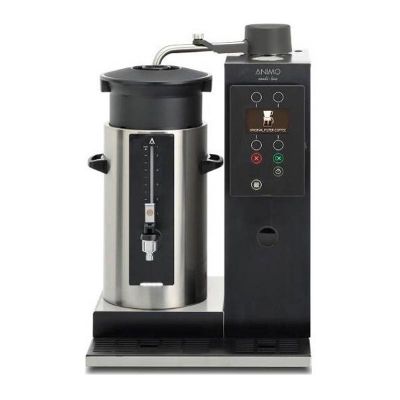
Product A
Animo ComBi-Line CB 1x10 L Cylindrical Filter Coffee Machine, 10 L
This compact filter coffee machine offers a 10-liter container and 60 liters per hour output. It features a digital interface, programmable timer, and durable aluminum casing.
- Power Source
- Electric
- Voltage
- 400 V
- Power
- 6175 W
- Width
- 590 mm
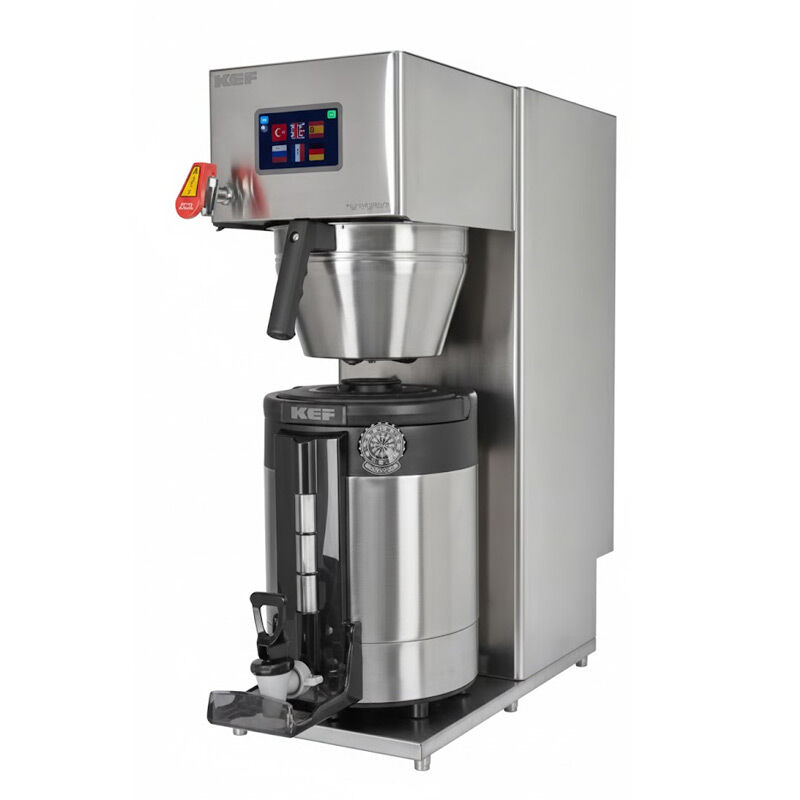
Product B
KEF Filtronist FLS-3.8 SHORT Programmable Filter Coffee Machine
Compact programmable filter coffee machine with a 4.3-inch touchscreen and 30 liters per hour capacity. Features a 3.8-liter thermal container and customizable brewing controls.
- Power Source
- Electric
- Voltage
- 220 V
- Power
- 3000 W
- Width
- 477 mm
On this page
- The two machines
- What actually separates them
- The utility bill angle
- Efficiency claims vs operating reality
- Heat and ventilation
- Electrical work and startup
- Who should pay for efficiency
- Where they differ
- Strengths and weak spots
- Which one for which kitchen?
- A specialty café
- A hotel breakfast service
- A roastery or tasting bar
- Before you order
- Our call
- Questions we get asked
- Does the Animo ComBi-Line require a drain?
- Can the KEF Filtronist run on 400 V?
- What is the actual annual energy cost?
- Related comparisons
The two machines
| Product | Brand | Category | Key specs | |
|---|---|---|---|---|
| A | Animo ComBi-Line CB 1x10 L Cylindrical Filter Coffee Machine, 10 L | Animo | Filter Coffee Machines | Power Source: Electric; Voltage: 400 V; Power: 6175 W |
| B | KEF Filtronist FLS-3.8 SHORT Programmable Filter Coffee Machine | KEF | Filter Coffee Machines | Power Source: Electric; Voltage: 220 V; Power: 3000 W |
What actually separates them
Start your morning rush with a steady stream of hot coffee, not a tripped breaker. The Animo ComBi-Line CB 1x10 L and KEF Filtronist FLS-3.8 SHORT serve different operational realities. One prioritizes massive volume with industrial power; the other focuses on compact efficiency. Your choice dictates your utility bill and kitchen layout.
All figures, including power draw and dimensions, come from the provided evidence.
The utility bill angle
The connected load difference is stark: 6,175 W for the Animo versus 3,000 W for the KEF. This nearly doubles the electrical demand for the Dutch machine. While nameplate power does not equal constant consumption, the Animo’s higher wattage suggests a more aggressive heating profile. You must account for this load when calculating your site’s total electrical capacity.
Using the estimated annual energy figures, the Animo consumes 14,820 kWh/year compared to the KEF’s 7,200 kWh/year. These estimates assume 8 hours of daily operation at full nameplate power for 300 days. In reality, duty cycles are lower, but the Animo will still likely cost twice as much to run. The KEF’s efficiency is mathematically undeniable.
Efficiency claims vs operating reality
The KEF Filtronist has insulated water tank, a specific design choice that reduces standby heat loss. This insulation helps maintain temperature without continuous high-power cycling. The Animo ComBi-Line relies on a double-walled insulated stainless steel boiler, which also aids retention. However, the Animo’s 10 L capacity requires more thermal mass to heat initially.
Both machines offer programmable timers and pulse brewing systems. The KEF supports four customizable brewing programs, allowing you to optimize volume and temperature for specific beans. The Animo includes pre-wetting and pulse brewing for extraction quality. While both aim for consistency, the KEF’s lower power draw suggests less energy waste during idle periods between brews.
Heat and ventilation
A 6,175 W machine rejects more ambient heat into the kitchen than a 3,000 W unit. This thermal output can raise the ambient temperature in small service areas, increasing cooling loads in summer. The Animo’s larger footprint and higher power density (28.2 kW/m³) mean it generates more heat per cubic meter than the KEF (45.2 kW/m³).
The KEF’s compact dimensions (477 mm width, 220 mm depth) allow it to fit into tighter spaces, potentially reducing the volume of air it needs to heat. The Animo requires 590 mm width and 470 mm depth. If your kitchen lacks solid ventilation, the Animo’s heat output could make the workspace uncomfortable during peak service hours.
Electrical work and startup
Voltage compatibility is a critical installation hurdle. The Animo ComBi-Line requires a 400 V supply, typical for industrial three-phase circuits. The KEF Filtronist operates on 220 V, standard for many commercial single-phase outlets. You must verify your existing circuit and breaker ratings before ordering. Installing the Animo may require an electrician to upgrade your service panel.
Neither spec sheet specifies the phase (single or three-phase) for the 400 V Animo unit. This missing evidence is a significant risk for installation planning. You must confirm the phase with the dealer. The KEF’s 220 V requirement is simpler to integrate into most existing commercial kitchens, reducing upfront electrical modification costs.
Who should pay for efficiency
If your operation runs high-volume batch brewing for extended periods, the Animo’s 60 L/hour output justifies its energy cost. It serves small cafes and offices needing reliable, high-volume production. The KEF’s 30 L/hour capacity is sufficient for smaller volumes but may bottleneck during intense rushes. You pay for throughput with the Animo.
For establishments prioritizing energy savings and space efficiency, the KEF is the rational choice. Its 3.8 L thermal container and 12 L hot water tank support continuous service for smaller groups. If your daily coffee volume is moderate, the Animo’s excess capacity and power are unnecessary expenses. Efficiency matters most when utilization is high but volume is low.
Where they differ
| Specification | A | B | What it changes in practice |
|---|---|---|---|
| Connected Load | 6,175 W | 3,000 W | The Animo draws more than double the power, impacting utility bills and electrical infrastructure requirements. |
| Voltage | 400 V | 220 V | The Animo requires industrial 400 V supply, potentially needing an electrician, while the KEF fits standard 220 V outlets. |
| Footprint | 0.3 m² | 0.1 m² | The KEF is significantly smaller, saving counter space and reducing the kitchen’s thermal load. |
| Brewing Capacity | 60 L/hour | 30 L/hour | The Animo produces coffee twice as fast, suitable for high-volume rushes where the KEF might bottleneck. |
Strengths and weak spots
| Strengths | Limitations | |
|---|---|---|
| A | - High 60 L/hour brewing capacity handles large volumes efficiently. - 10 L container reduces refill frequency during service. |
- High 6,175 W power draw increases energy costs significantly. - Skip it if your kitchen lacks a 400 V circuit or has limited ventilation. |
| B | - Low 3,000 W connected load minimizes annual energy consumption. - Insulated water tank reduces standby heat loss and energy waste. |
- Lower 30 L/hour output may struggle during extreme peak rushes. - Skip it if you require more than 3.8 L of immediate coffee per batch. |
Which one for which kitchen?
A specialty café
Specialty cafés often prioritize quality and workflow over raw volume. The KEF’s customizable brewing programs and precise temperature control allow for fine-tuning extraction. The Animo’s high power is unnecessary for small batches. The KEF’s compact size also leaves more room for other equipment.
Pick: KEF Filtronist FLS-3.8 SHORT Programmable Filter Coffee Machine
A hotel breakfast service
Hotel breakfasts involve high volume and strict timelines. Guests expect immediate coffee without waiting for baristas. The Animo’s 60 L/hour output and 10 L capacity ensure a steady supply during the morning rush. The KEF’s smaller capacity may require frequent refilling, slowing service.
Pick: Animo ComBi-Line CB 1x10 L Cylindrical Filter Coffee Machine, 10 L
A roastery or tasting bar
Roasteries often serve smaller, curated batches. The KEF’s programmable settings allow for specific brewing profiles that match different roast levels. Its compact footprint fits well in tasting areas. The Animo’s industrial power is overkill for this controlled environment.
Pick: KEF Filtronist FLS-3.8 SHORT Programmable Filter Coffee Machine
Before you order
- Confirm the supply phase for the Animo ComBi-Line: The spec sheet lists 400 V but does not specify single or three-phase, which is critical for installation.
- Verify the existing circuit breaker rating for the Animo: The 6,175 W load requires a dedicated circuit; standard outlets may not support it.
- Check the KEF Filtronist’s warranty terms: Warranty duration is missing from the spec sheet and affects long-term ownership costs.
- Measure overhead clearance for the Animo’s 790 mm height: The Animo is significantly taller and may not fit under low hoods or shelves.
- Confirm if the KEF requires a drain connection: Drain requirements are not specified and could impact installation location.
Our call
The KEF Filtronist FLS-3.8 SHORT is the superior choice for most operators due to its energy efficiency and compact design. It halves the estimated annual energy consumption and fits standard 220 V circuits, reducing installation complexity. The Animo ComBi-Line is only justified if you consistently need 60 L/hour output and have the industrial electrical infrastructure to support it. For energy-conscious buying, the KEF wins.
Questions we get asked
Does the Animo ComBi-Line require a drain?
The spec sheet does not specify if a drain is required. You must confirm this with the dealer, as batch brewers often need drainage for overflow or cleaning.
Can the KEF Filtronist run on 400 V?
No, the KEF Filtronist is specified for 220 V. Using it on 400 V would damage the machine. Ensure your outlet matches the voltage requirement.
What is the actual annual energy cost?
The spec sheet provides estimated figures (14,820 kWh for Animo, 7,200 kWh for KEF) based on 8 hours/day at full power. Actual costs depend on your local electricity rates and usage patterns.
Related comparisons
FindGastro Editorial · Commercial kitchen equipment editors
Author profile →