
Anka BYNC3 vs Çayista QQSE3S: Energy Density and Footprint Trade-offs
A spec sheet comparison of two commercial tea makers.
The Anka BYNC3 offers lower connected load and larger capacity but demands more vertical clearance. The Çayista QQSE3S is more compact horizontally but draws more power. Choose Anka for space-constrained counters with low electrical capacity; choose Çayista for tighter footprints where power is abundant.
Products compared
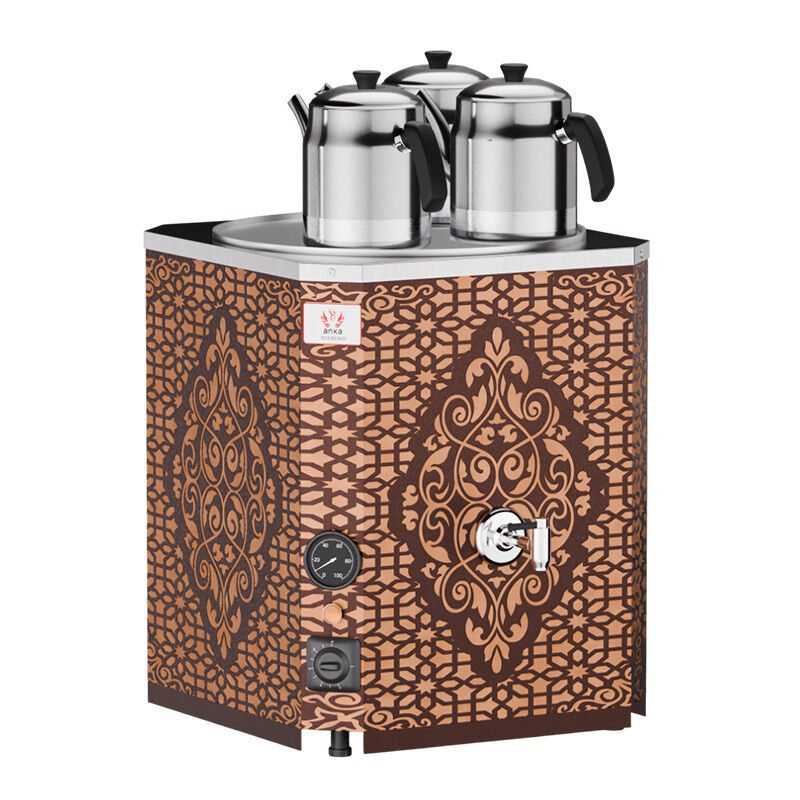
Product A
Anka BYNC3 New Generation Float Tea Maker, 35 L, Copper
The Anka BYNC3 is a 35-liter float tea maker with three infusers, featuring automatic water intake and smart temperature control. Built for continuous service in commercial kitchens, it ensures consistent tea quality and easy maintenance.
- Power Source
- Electric
- Voltage
- 220 V
- Power
- 2500 W
- Width
- 400 mm
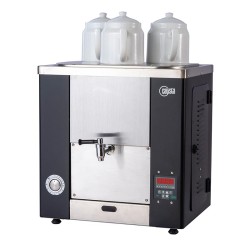
Product B
Çayista QQSE3S QerQüQ Tea Maker, 23 L
Large 23-liter electric tea maker with smart control and 3 teapot compartments. Features a digital temperature sensor and continuous hot water supply.
- Power Source
- Electric
- Voltage
- 220 V
- Power
- 3000 W
- Width
- 450 mm
On this page
- The two machines
- What actually separates them
- The utility bill angle
- Electrical work and startup
- Efficiency claims vs operating reality
- Heat and ventilation
- Who should pay for efficiency
- Where they differ
- Strengths and weak spots
- Which one for which kitchen?
- A cocktail bar
- A juice or smoothie counter
- A hotel minibar or room service
- Before you order
- Our call
- Questions we get asked
- Does the Anka BYNC3 require a plumber?
- Can the Çayista QQSE3S fit under a standard 500 mm shelf?
- Is the energy difference between the two units significant?
- Related comparisons
The two machines
| Product | Brand | Category | Key specs | |
|---|---|---|---|---|
| A | Anka BYNC3 New Generation Float Tea Maker, 35 L, Copper | Anka | Tea Machines | Power Source: Electric; Voltage: 220 V; Power: 2500 W |
| B | Çayista QQSE3S QerQüQ Tea Maker, 23 L | Çayista | Tea Machines | Power Source: Electric; Voltage: 220 V; Power: 3000 W |
What actually separates them
A busy hotel breakfast service requires consistent tea production without overwhelming the electrical panel. The Anka BYNC3 New Generation Float Tea Maker and the Çayista QQSE3S QerQüQ Tea Maker represent two distinct engineering approaches to this problem. One prioritizes energy efficiency per unit of volume, while the other maximizes throughput in a smaller footprint.
This analysis relies strictly on manufacturer spec sheets. All conclusions regarding energy consumption, heat output, and operational efficiency are derived from the provided specifications. Buyers must verify installation requirements with a qualified electrician before committing to either model.
The utility bill angle
The Anka BYNC3 operates at a connected load of 2.5 kW, significantly lower than the Çayista QQSE3S QerQüQ’s 3.0 kW rating. This 500 W difference represents a 20% reduction in peak demand. While nameplate power does not equal continuous consumption, the Anka unit places less strain on the kitchen’s electrical infrastructure during peak brewing cycles.
Estimated annual energy calculations assume 8 hours of daily operation at full nameplate power for 300 days. Under this scenario, the Anka BYNC3 consumes approximately 6,000 kWh annually, compared to 7,200 kWh for the Çayista. This 1,200 kWh gap translates directly to lower utility costs, assuming similar duty cycles in actual service.
Electrical work and startup
Both units require a 220 V, 50-60 Hz single-phase connection, but the current demand differs. The Çayista QQSE3S draws higher amperage due to its 3,000 W rating, potentially requiring a heavier gauge circuit breaker. The Anka BYNC3, with its 2,500 W load, is less demanding on the wiring, though a 32A fuse is still specified for safety.
Neither spec sheet explicitly states the phase configuration, so buyers must confirm single-phase availability with their dealer. The Anka BYNC3 includes a 3/8” water inlet, suggesting a direct plumbing connection for automatic intake. The Çayista QQSE3S is freestanding, which may simplify installation but requires manual water management or a separate supply line.
Efficiency claims vs operating reality
The Anka BYNC3 utilizes an infuser system with a copper body, which provides excellent heat retention. This material choice helps maintain brewing temperature with minimal energy input, supporting its lower connected load. The smart temperature control system ensures precision, reducing the need for constant reheating cycles that waste energy.
In contrast, the Çayista QQSE3S uses a boiler system with a digital temperature sensor. While boilers are efficient for rapid recovery, the 3,000 W heating element suggests a higher energy intensity for maintaining volume. The drawer-style drip release and mono-block tank design prioritize speed and leak prevention over thermal mass efficiency.
Heat and ventilation
Higher connected load generates more ambient heat. The Çayista QQSE3S, drawing 3.0 kW, will dissipate more waste heat into the kitchen environment than the 2.5 kW Anka BYNC3. In a small, poorly ventilated prep area, this additional heat load can increase air conditioning costs and reduce staff comfort during service.
The Anka BYNC3’s 35-liter capacity and 18 kg weight indicate a substantial thermal mass. Its copper body helps contain heat within the brewing chamber, reducing ambient output. However, the 520 mm height may require careful placement to avoid trapping heat under low hoods, whereas the Çayista’s 480 mm profile fits under standard cabinetry.
Who should pay for efficiency
For high-volume operations running continuously, the Anka BYNC3’s lower energy consumption and larger 35-liter capacity justify its selection. The 1,200 kWh annual saving is significant, and the automatic water intake reduces labor. The 18 kg weight ensures stability, but the 400 mm width requires precise counter planning.
For venues with limited electrical capacity or tighter footprints, the Çayista QQSE3S offers a viable alternative. Its 23-liter capacity and 16 kg weight make it lighter and easier to move. However, the 3,000 W draw and 450 mm width demand more power and space. The choice hinges on whether energy savings or spatial flexibility is the priority.
Where they differ
| Specification | A | B | What it changes in practice |
|---|---|---|---|
| Connected Load | 2.5 kW | 3.0 kW | The Anka draws less power, reducing electrical strain and estimated annual energy costs by 1,200 kWh. |
| Jug Capacity | 35 L | 23 L | The Anka holds 52% more tea, reducing refill frequency for high-volume service. |
| Footprint Width | 400 mm | 450 mm | The Anka is 50 mm narrower, fitting tighter counter runs where the Çayista cannot. |
| Height | 520 mm | 480 mm | The Çayista is 40 mm shorter, allowing installation under lower shelves or hoods. |
| Brewing System | Infuser (Copper) | Boiler | Copper infusers retain heat better, supporting the Anka’s lower energy consumption. |
| Weight | 18 kg | 16 kg | The Çayista is 2 kg lighter, making it slightly easier to relocate during cleaning. |
Strengths and weak spots
| Strengths | Limitations | |
|---|---|---|
| A | - Lower connected load (2.5 kW) reduces annual energy consumption by approximately 1,200 kWh. - Larger 35-liter capacity and copper body provide better heat retention and higher throughput. |
- Taller profile (520 mm) may not fit under low hoods or shelves. - Skip it if you have strict overhead clearance limits below 520 mm. |
| B | - Compact width (450 mm) and lower height (480 mm) fit tighter vertical and horizontal spaces. - Freestanding design offers flexibility in placement without permanent plumbing connections. |
- Higher connected load (3.0 kW) increases electrical demand and ambient kitchen heat. - Avoid this if your kitchen has limited electrical capacity or requires maximum energy efficiency. |
Which one for which kitchen?
A cocktail bar
Cocktail bars often have limited counter space and may not prioritize large-volume tea service. The Çayista QQSE3S’s compact footprint and lower height make it easier to integrate into a busy bar setup. Its 23-liter capacity is sufficient for standard tea offerings without overwhelming the workspace.
Pick: Çayista QQSE3S QerQüQ Tea Maker, 23 L
A juice or smoothie counter
Juice counters rarely serve tea, but if they do, space is at a premium. The Anka BYNC3’s narrower width (400 mm) allows it to fit into tighter runs than the Çayista. However, its height might interfere with overhead storage. If space allows, the Anka’s efficiency is beneficial.
Pick: Anka BYNC3 New Generation Float Tea Maker, 35 L, Copper
A hotel minibar or room service
Hotel room service often requires reliable, high-volume tea production for breakfast rushes. The Anka BYNC3’s 35-liter capacity and automatic water intake reduce labor and ensure consistent supply. Its lower energy consumption is also advantageous for hotels focused on sustainability goals.
Pick: Anka BYNC3 New Generation Float Tea Maker, 35 L, Copper
Before you order
- Confirm the supply phase with the dealer before ordering; neither spec sheet states it: Both units require 220V, but the phase (single or three) affects breaker selection.
- Verify the warranty terms for both units; neither spec sheet lists the warranty duration: Warranty coverage impacts long-term maintenance costs and risk.
- Check if a drain is required for the Anka BYNC3; the spec sheet is silent on drainage: Automatic water intake may require a drain for overflow or cleaning.
- Confirm ventilation requirements for the Çayista QQSE3S; no noise or heat emission data is provided: High wattage may require additional ventilation to manage ambient heat.
- Measure the actual noise level if the unit will be near guest areas; dB ratings are missing: Commercial boilers and infusers can be noisy, affecting guest comfort.
Our call
The Anka BYNC3 is the superior choice for energy-conscious operations with adequate vertical clearance. Its lower connected load and larger capacity make it ideal for high-volume service. The Çayista QQSE3S is better suited for tight spaces where electrical capacity is not a constraint. Buyers must verify phase and warranty details before purchase.
Questions we get asked
Does the Anka BYNC3 require a plumber?
The Anka BYNC3 has a 3/8” water inlet, suggesting a direct plumbing connection is possible. However, the spec sheet does not specify if a drain is required, so consult a plumber for installation details.
Can the Çayista QQSE3S fit under a standard 500 mm shelf?
Yes, the Çayista QQSE3S is 480 mm high, leaving 20 mm of clearance under a 500 mm shelf. The Anka BYNC3, at 520 mm, would not fit.
Is the energy difference between the two units significant?
Under full-load assumptions, the Anka BYNC3 uses 1,200 kWh less annually. This is a significant saving for high-volume operations, though actual consumption depends on duty cycle.
Related comparisons
FindGastro Editorial · Commercial kitchen equipment editors
Author profile →