
Anka BYNC2 vs SilverInox ELS-02K Tea Maker: Footprint Reality Check
A compact 25L copper Anka machine challenges a taller, wider 23L SilverInox unit.
Choose the Anka BYNC2 if floor space is your primary constraint. Its 0.13 m² footprint is significantly smaller than the SilverInox ELS-02K’s 0.17 m². The SilverInox offers a 250W power advantage but demands more clearance. For low-ceiling environments, the Anka’s lower profile is safer. Verify electrical phase before ordering either unit.
Products compared
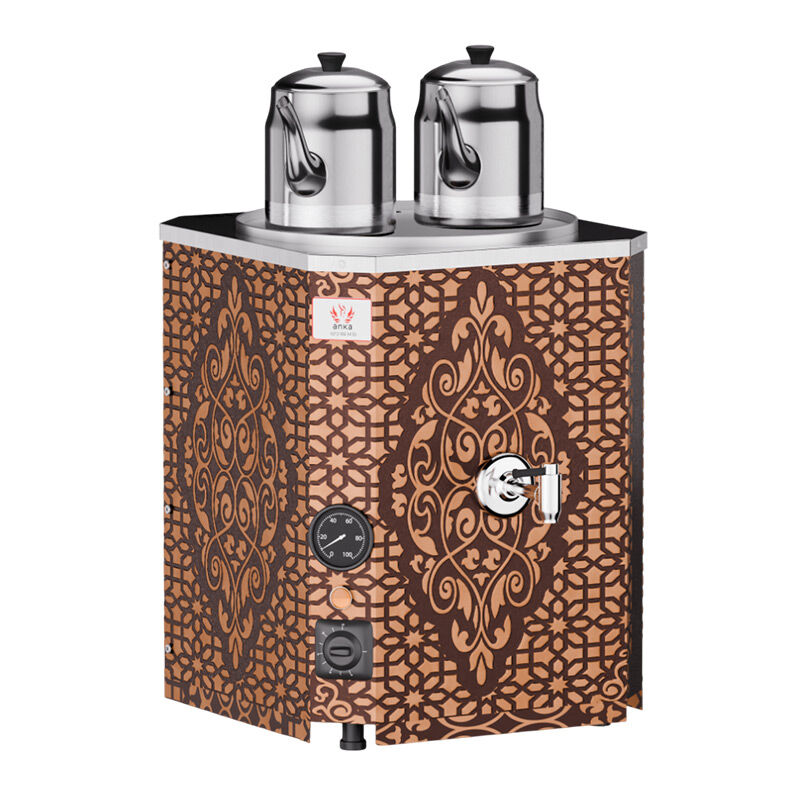
Product A
Anka BYNC2 Tea Maker, 25 L, Copper
A 25-liter tea maker with copper construction and dual teapots, designed for high-volume tea service in commercial kitchens.
- Power Source
- Electric
- Voltage
- 220 V
- Power
- 2000 W
- Width
- 350 mm
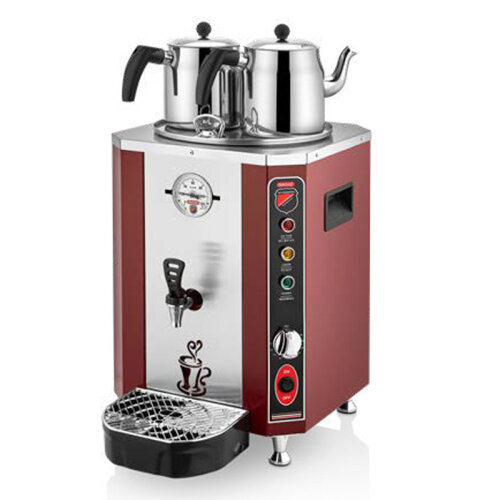
Product B
SilverInox ELS-02K 2 Teapot Tea Maker, 23 L, Electric, Red
A commercial tea maker with 23-liter capacity and two teapots. Constructed from 304 stainless steel with thermostat control and safety features for reliable operation.
- Power Source
- Electric
- Voltage
- 220 V
- Power
- 2250 W
- Width
- 370 mm
On this page
- The two machines
- What actually separates them
- The space math
- Doors, drawers and service access
- Utilities and installation
- Which kitchen each one fits
- Where they differ
- Strengths and weak spots
- Which one for which kitchen?
- A cocktail bar
- A juice or smoothie counter
- A hotel minibar or room service
- Before you order
- Our call
- Questions we get asked
- Which tea maker has a larger capacity?
- Does the SilverInox fit under standard hoods?
- Which machine is more energy efficient?
- Related comparisons
The two machines
| Product | Brand | Category | Key specs | |
|---|---|---|---|---|
| A | Anka BYNC2 Tea Maker, 25 L, Copper | Anka | Tea Machines | Power Source: Electric; Voltage: 220 V; Power: 2000 W |
| B | SilverInox ELS-02K 2 Teapot Tea Maker, 23 L, Electric, Red | SilverInox | Tea Machines | Power Source: Electric; Voltage: 220 V; Power: 2250 W |
What actually separates them
Commercial tea machines often promise high volume but ignore the physical reality of the prep line. Space is the scarcest resource in a busy kitchen, yet spec sheets rarely highlight how dimensions impact workflow. We compare two industrial tea makers based strictly on manufacturer data to reveal their true spatial impact.
We calculate floor area and volume to show how each unit occupies your kitchen. Operators must verify installation details with their dealer before committing to a purchase.
The space math
The Anka BYNC2 claims a compact 350 mm width and 370 mm depth, resulting in a 0.13 m² footprint. This narrow profile allows it to fit into tight corners or narrow prep lines where wider units cannot go. The 25-liter capacity is packed into this small area, maximizing yield per square meter.
In contrast, the SilverInox ELS-02K measures 370 mm wide and 470 mm deep, creating a larger 0.17 m² footprint. The extra depth adds bulk but may accommodate internal components differently. While the difference seems small, the SilverInox requires 30% more floor space, which can disrupt workflow in cramped kitchens.
Doors, drawers and service access
Height is a critical factor often overlooked in layout planning. The Anka BYNC2 stands at 460 mm, providing a lower profile that may fit under standard shelves or low hoods. Its 13 kg weight suggests a solid build, though it is heavier than the SilverInox despite its larger capacity.
This extra height might interfere with overhead storage or ventilation hoods in older kitchens. The unit weighs only 10.5 kg, making it lighter and potentially easier to move during cleaning, despite its smaller 23-liter capacity.
Utilities and installation
Power consumption differs between the two units, with the SilverInox drawing 2250 W compared to the Anka’s 2000 W. This 250 W difference means the SilverInox heats faster but places a higher load on your electrical circuit. Both units operate on 220V, but the phase requirement remains unspecified in the spec sheets.
Energy calculations assume 8 hours of daily operation at full nameplate power for 300 days. Under this model, the SilverInox consumes approximately 5,400 kWh annually, while the Anka uses 4,800 kWh. The Anka is more energy-efficient per unit of volume, offering better long-term operating costs for high-volume environments.
Which kitchen each one fits
The Anka BYNC2 is suitable for cafes, restaurants, and catering services that prioritize space efficiency. Its copper construction offers durability and heat retention, ideal for continuous service in high-demand settings. The compact design allows it to be placed in tight back-of-house areas without disrupting the main workflow.
The SilverInox ELS-02K targets cafes and restaurants that value speed and stainless steel hygiene. Its 304-grade steel body is easy to clean and resistant to corrosion. The side handles facilitate transport, making it suitable for venues that need to move the machine for deep cleaning or seasonal menu changes.
Where they differ
| Specification | A | B | What it changes in practice |
|---|---|---|---|
| Footprint | 0.13 m² | 0.17 m² | The Anka saves 0.04 m² of floor space, important for tight kitchens. |
| Height | 460 mm | 500 mm | The Anka fits under lower overheads, reducing installation risks. |
| Power | 2000 W | 2250 W | The SilverInox heats faster but requires a stronger electrical circuit. |
| Weight | 13 kg | 10.5 kg | The SilverInox is lighter, making it easier to move for cleaning. |
Strengths and weak spots
| Strengths | Limitations | |
|---|---|---|
| A | - Smaller footprint (0.13 m²) saves valuable floor space. - Lower height (460 mm) fits under standard overheads. |
- Lower power (2000 W) may result in slower reheating times. - Skip it if you need the fastest possible boil time; the SilverInox is 12.5% more powerful. |
| B | - Higher power (2250 W) ensures faster heating cycles. - Lighter weight (10.5 kg) facilitates easier movement and cleaning. |
- Larger footprint (0.17 m²) requires more floor space. - Skip it if your kitchen has low overhead clearance; the 500 mm height may not fit under standard hoods. |
Which one for which kitchen?
A cocktail bar
Speed at the well is critical. The SilverInox’s 2250 W power delivers faster reheating, reducing wait times during peak service. However, the Anka’s compact size allows it to fit in tighter bar layouts without obstructing bartender movement.
Pick: Anka BYNC2 Tea Maker, 25 L, Copper
A juice or smoothie counter
Prep volume and space are key. The Anka’s 25-liter capacity provides more tea for mixed drinks, and its smaller footprint leaves room for other equipment. The SilverInox’s larger depth might interfere with narrow counter spaces.
Pick: Anka BYNC2 Tea Maker, 25 L, Copper
A hotel minibar or room service
Small batches and quiet operation are priorities. Neither machine is ideal for room service, but the Anka’s lower power draw and smaller size make it less intrusive in a small hotel kitchen. The SilverInox’s higher power might be overkill for occasional use.
Pick: Anka BYNC2 Tea Maker, 25 L, Copper
Before you order
- Electrical phase: Neither spec sheet specifies if the units are single or three-phase, which is critical for installation.
- Warranty terms: Warranty duration and coverage are not listed, affecting long-term cost of ownership.
- Drain requirements: It is unclear if the machines require a direct drain connection or if they are self-contained.
- Noise levels: Decibel ratings are missing, which is important for machines placed near guest areas.
- Ventilation needs: Specific ventilation requirements for the boilers are not stated, impacting kitchen airflow planning.
Our call
The Anka BYNC2 is the pragmatic choice for most commercial kitchens due to its superior footprint and height. Its 0.13 m² base and 460 mm profile allow it to fit into spaces where the SilverInox simply cannot go. While the SilverInox offers 250W more power, the Anka’s 25-liter capacity and lower energy consumption make it more versatile for high-volume service. Verify electrical phase before ordering.
Questions we get asked
Which tea maker has a larger capacity?
The Anka BYNC2 has a 25-liter capacity, while the SilverInox ELS-02K holds 23 liters.
Does the SilverInox fit under standard hoods?
The SilverInox is 500 mm tall, which may not fit under low hoods; the Anka is 40 mm shorter.
Which machine is more energy efficient?
The Anka BYNC2 uses 2000 W compared to the SilverInox’s 2250 W, making it more energy efficient.
Related comparisons
FindGastro Editorial · Commercial kitchen equipment editors
Author profile →