
Anka BYNC2 vs SilverInox ELS-02S Tea Maker Durability
We compare the Anka BYNC2 copper float maker and SilverInox ELS-02S stainless steel unit to determine which withstands commercial duty cycles better.
For pure material longevity in high-mineral water, the Anka BYNC2’s copper body offers superior thermal inertia and corrosion resistance compared to the SilverInox ELS-02S. However, the SilverInox’s 304 stainless steel provides easier sanitation and a lower risk of internal scaling if water treatment is poor. Choose Anka for heat retention; choose SilverInox for hygiene simplicity.
Products compared
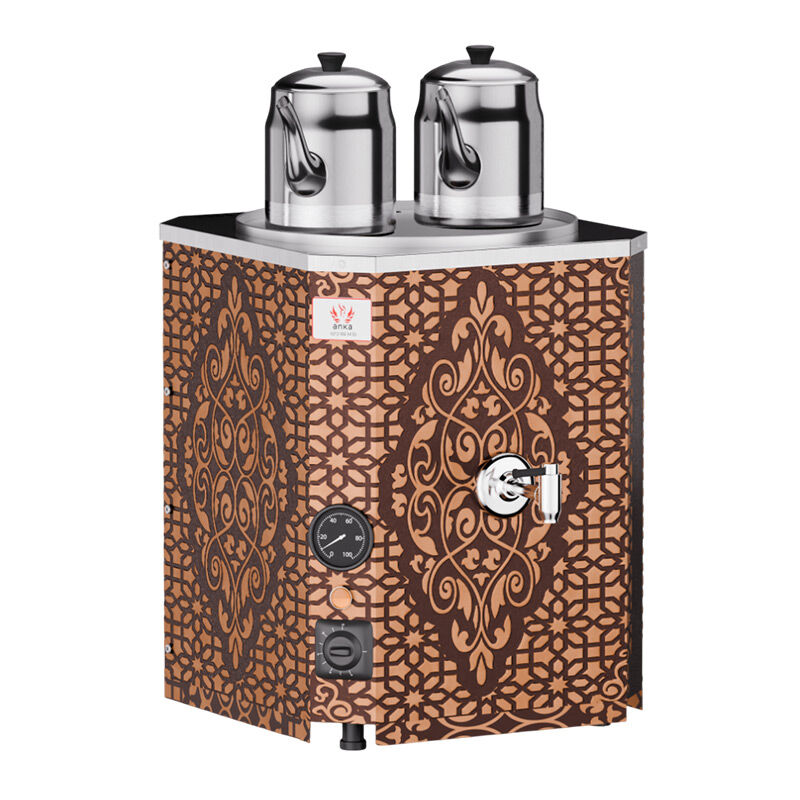
Product A
Anka BYNC2 New Generation Float Tea Maker, 25 L, Copper
The Anka BYNC2 is a 25-liter float tea maker with two infusers, featuring automatic water intake and smart temperature control. Built for commercial use, it ensures consistent tea quality and easy maintenance.
- Power Source
- Electric
- Voltage
- 220 V
- Power
- 2000 W
- Width
- 350 mm
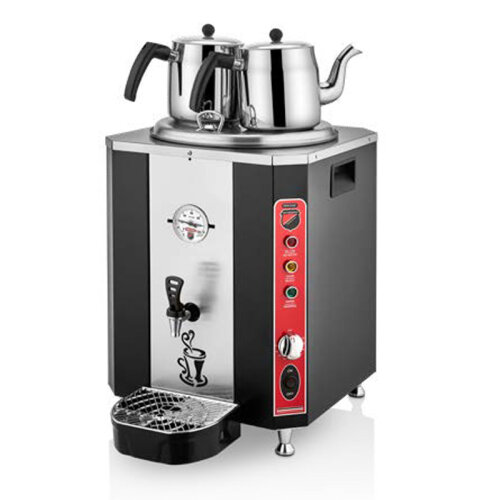
Product B
SilverInox ELS-02S 2 Infuser Tea Maker, 23 L, Electric, Black
The SilverInox ELS-02S is a 23-liter electric tea maker with two infusers, designed for commercial use. It features a black finish and warning system for low water level.
- Power Source
- Electric
- Voltage
- 220 V
- Power
- 2250 W
- Width
- 370 mm
On this page
- The two machines
- What actually separates them
- Build quality you can verify
- Warranty versus downtime
- Wear parts and service access
- Water, scale and cleaning
- Who should pay more
- Where they differ
- Strengths and weak spots
- Which one for which kitchen?
- A cocktail bar
- A juice or smoothie counter
- A hotel minibar or room service
- Before you order
- Our call
- Questions we get asked
- Which tea machine is more durable?
- Do I need professional installation?
- Which is better for high-volume service?
- Related comparisons
The two machines
| Product | Brand | Category | Key specs | |
|---|---|---|---|---|
| A | Anka BYNC2 New Generation Float Tea Maker, 25 L, Copper | Anka | Tea Machines | Power Source: Electric; Voltage: 220 V; Power: 2000 W |
| B | SilverInox ELS-02S 2 Infuser Tea Maker, 23 L, Electric, Black | SilverInox | Tea Machines | Power Source: Electric; Voltage: 220 V; Power: 2250 W |
What actually separates them
Commercial tea machines often fail not from electrical burnout, but from material degradation or scaling. We analyzed the Anka BYNC2 and SilverInox ELS-02S spec sheets to isolate durability factors.
The Anka BYNC2 uses a 25-liter copper vessel with smart temperature control, while the SilverInox ELS-02S offers 23 liters of 304 stainless steel. We evaluate which construction better withstands the thermal shock and chemical exposure of daily professional service.
Build quality you can verify
The Anka BYNC2 distinguishes itself with a copper body, a material chosen for its exceptional heat retention and natural antimicrobial properties. Copper conducts heat rapidly and evenly, reducing thermal stress on the heating element during the 2 kW cycling. This construction supports the machine’s 25-liter capacity, allowing it to maintain consistent brew temperatures without overheating the water.
In contrast, the SilverInox ELS-02S utilizes 304 stainless steel, the industry standard for food-grade hygiene. While stainless steel does not retain heat as efficiently as copper, it is impervious to acidic tea residues and does not require polishing. The SilverInox weighs 10.5 kg, making it 2.5 kg lighter than the Anka’s 13 kg unit, which simplifies installation on standard counters.
Warranty versus downtime
Neither manufacturer discloses warranty terms in the provided spec sheets, creating a significant risk for operators relying on long-term durability. Without explicit warranty coverage, a failure in the Anka’s copper heating element or the SilverInox’s thermostat could result in substantial downtime. Buyers must verify service coverage directly with the dealer before committing to either unit.
The Anka BYNC2 requires professional installation due to its 32A fuse requirement and 3/8” water inlet, adding complexity to the setup. If the installation is improper, the copper tank may suffer from uneven heating. The SilverInox ELS-02S, marked as not requiring installation, offers a plug-and-play advantage that reduces setup-related failure risks.
Wear parts and service access
The Anka BYNC2 has removable top lid, facilitating access to the internal tank for descaling and cleaning. This design choice is important for copper vessels, which can develop patina or scale over time. The 25-liter capacity allows for large batches, but the copper interior requires regular attention to prevent mineral buildup that could insulate the heating element.
The SilverInox ELS-02S includes a warning system for low water levels, a vital feature for preventing dry-fire damage to the stainless steel heating element. This safety mechanism reduces the likelihood of catastrophic failure. However, the spec sheet does not specify if the heating element is replaceable, which is a key factor in long-term serviceability.
Water, scale and cleaning
Copper is naturally resistant to limescale adhesion, but it can react with acidic tea blends if not properly maintained. The Anka BYNC2’s smart temperature control helps mitigate this by preventing overheating, which accelerates scale formation. Operators must ensure the water supply is filtered to preserve the copper’s integrity and prevent pitting.
Stainless steel is inert and does not react with tea acids, making the SilverInox ELS-02S ideal for high-acidity blends. The 23-liter capacity is slightly smaller than the Anka’s, but the stainless steel interior is easier to sanitize. The black finish on the exterior may show water spots, but the internal tank remains hygienic with minimal effort.
Who should pay more
The Anka BYNC2’s 2 kW power draw and 25-liter capacity make it suitable for high-volume venues like hotels and catering services. The copper construction justifies a potential premium for operators prioritizing thermal consistency and heat retention. The 13 kg weight and 370 mm depth require a sturdy counter, but the compact footprint saves space.
The SilverInox ELS-02S, with its 2.25 kW power and 23-liter capacity, is better suited for cafes and restaurants with moderate tea service. The 304 stainless steel construction offers a lower initial cost and easier maintenance. The 10.5 kg weight and 470 mm depth make it less stable but easier to move for cleaning.
Where they differ
| Specification | A | B | What it changes in practice |
|---|---|---|---|
| Material | Copper | Stainless Steel 304 | Copper offers better heat retention and natural antimicrobial properties, while stainless steel provides superior chemical resistance and easier sanitation. |
| Capacity | 25 L | 23 L | The Anka’s larger capacity supports higher volume service, reducing refill frequency in busy environments. |
| Weight | 13 kg | 10.5 kg | The SilverInox is lighter, making it easier to move for cleaning, but the Anka’s weight may indicate more solid construction. |
| Power | 2000 W | 2250 W | The SilverInox has a higher power draw, potentially heating water faster, but consumes more energy during operation. |
| Installation | Required | Not Required | The Anka requires professional installation due to its electrical and water connections, adding to setup complexity and cost. |
Strengths and weak spots
| Strengths | Limitations | |
|---|---|---|
| A | - Copper body provides superior heat retention and natural antimicrobial properties. - 25-liter capacity supports high-volume service with fewer refills. |
- Requires professional installation and 32A fuse, increasing setup complexity. - Skip it if you lack access to filtered water, as copper can pit from hard water. |
| B | - 304 stainless steel is inert and easy to sanitize, resisting tea acids. - Low-water warning system prevents dry-fire damage to the heating element. |
- Stainless steel does not retain heat as well as copper, requiring more frequent reheating. - Avoid this if you need a larger capacity, as the 23-liter tank is smaller than the Anka’s. |
Which one for which kitchen?
A cocktail bar
In a cocktail bar, speed and noise are critical. The SilverInox ELS-02S is quieter and easier to clean between drinks, making it suitable for a busy well. The Anka BYNC2’s copper body may retain heat too long, affecting drink temperature consistency.
Pick: SilverInox ELS-02S 2 Infuser Tea Maker, 23 L, Electric, Black
A juice or smoothie counter
At a juice counter, hygiene is paramount. The SilverInox ELS-02S’s stainless steel interior is easier to sanitize and resistant to fruit acids, making it the better choice. The Anka BYNC2’s copper may require more frequent polishing.
Pick: SilverInox ELS-02S 2 Infuser Tea Maker, 23 L, Electric, Black
A hotel minibar or room service
For hotel minibar or room service, small batches and quiet operation are key. The Anka BYNC2’s 25-liter capacity is excessive for occasional use, while the SilverInox ELS-02S is too large for a minibar. Neither is ideal, but the SilverInox’s plug-and-play design is less complex.
Pick: SilverInox ELS-02S 2 Infuser Tea Maker, 23 L, Electric, Black
Before you order
- Warranty terms: Neither spec sheet specifies warranty length or coverage, which is critical for long-term durability assurance.
- Service access: Verify if the heating element is replaceable and how difficult it is to access internal components for repair.
- Water filtration requirements: Copper tanks may require filtered water to prevent pitting; confirm if the Anka BYNC2 has specific water quality recommendations.
- Electrical supply compatibility: The Anka BYNC2 requires a 32A fuse and 220V supply; ensure your venue’s electrical system can support this load.
- Cleaning agent compatibility: Confirm that the cleaning agents you use are safe for copper (Anka) and stainless steel (SilverInox) to avoid damage.
Our call
The Anka BYNC2 and SilverInox ELS-02S offer distinct durability profiles. The Anka’s copper body provides superior heat retention and natural antimicrobial properties, ideal for high-volume service where thermal consistency is critical. However, it requires professional installation and filtered water to prevent pitting. The SilverInox ELS-02S, with its 304 stainless steel construction, offers easier sanitation and chemical resistance, making it better for high-acid environments. Its plug-and-play design and low-water warning system reduce setup and failure risks. Choose Anka for thermal performance; choose SilverInox for hygiene and simplicity.
Questions we get asked
Which tea machine is more durable?
Durability depends on your water quality. Copper (Anka) resists scale but can pit with hard water. Stainless steel (SilverInox) is chemically inert and easier to maintain, making it more durable in high-acid environments.
Do I need professional installation?
Yes for the Anka BYNC2, which requires a 32A fuse and 3/8” water inlet. The SilverInox ELS-02S is plug-and-play and does not require installation.
Which is better for high-volume service?
The Anka BYNC2’s 25-liter capacity and copper heat retention make it better for high-volume service. The SilverInox ELS-02S’s 23-liter capacity is suitable for moderate use.
Related comparisons
FindGastro Editorial · Commercial kitchen equipment editors
Author profile →