
Animo CN10E vs SilverInox 2044: Energy Reality Check
A 100-watt hopper versus a 1,500-watt brewer. We compare their electrical demands, physical footprints, and operational realities for high-volume service.
Choose the Animo ComBi-Line CN10E if your priority is minimizing electrical load and fitting into tight spaces with a 100W draw. Select the SilverInox 2044 only if you need a 1,500W unit capable of brewing 12 liters of hot coffee directly in 160-cup batches.
Products compared
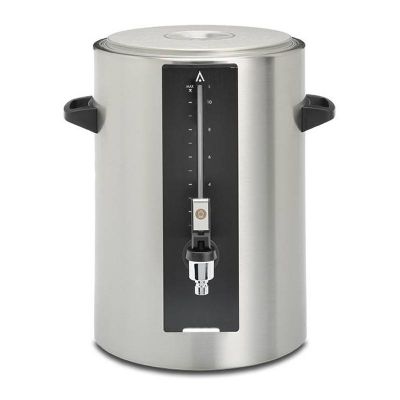
Product A
Animo ComBi-Line CN10E Cylindrical Filter Coffee Machine Hopper, 10 L
10-liter cylindrical filter coffee machine hopper with LED lighting and insulated lid. Designed for commercial use with 230V power and 100W consumption. Compact dimensions suit professional kitchens.
- Power Source
- Electric
- Voltage
- 230 V
- Power
- 100 W
- Width
- 307 mm
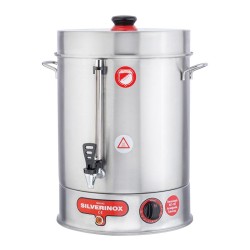
Product B
SilverInox 2044 Filter Coffee Machine, 12 L
The SilverInox 2044 Filter Coffee Machine offers a 12-liter capacity and is designed for commercial use with a 160-cup output. It features a thermostat for temperature control.
- Power Source
- Electric
- Voltage
- 220 V
- Power
- 1500 W
- Width
- 360 mm
On this page
- The two machines
- What actually separates them
- The utility bill angle
- Electrical work and startup
- Efficiency claims vs operating reality
- Heat and ventilation
- Who should pay for efficiency
- Where they differ
- Strengths and weak spots
- Which one for which kitchen?
- A specialty café
- A hotel breakfast service
- A roastery or tasting bar
- Before you order
- Our call
- Questions we get asked
- Can the Animo CN10E brew coffee?
- How many cups does the SilverInox 2044 produce?
- Is the SilverInox 2044 energy efficient?
- Related comparisons
The two machines
| Product | Brand | Category | Key specs | |
|---|---|---|---|---|
| A | Animo ComBi-Line CN10E Cylindrical Filter Coffee Machine Hopper, 10 L | Animo | Filter Coffee Machines | Power Source: Electric; Voltage: 230 V; Power: 100 W |
| B | SilverInox 2044 Filter Coffee Machine, 12 L | SilverInox | Filter Coffee Machines | Power Source: Electric; Voltage: 220 V; Power: 1500 W |
What actually separates them
Commercial kitchens often conflate connected load with actual consumption. Understanding these differences prevents costly circuit overloads and ensures your service flow remains uninterrupted during peak hours.
The SilverInox 2044 operates on a 220V supply with a 1,500W heating element, designed for rapid production. In contrast, the Animo ComBi-Line CN10E runs on 230V with a mere 100W consumption, functioning primarily as a holding vessel. These specifications dictate not just your utility bills, but also the physical layout of your prep area and the necessary ventilation requirements for a safe working environment.
The utility bill angle
The connected load difference is stark: the SilverInox 2044 draws 1,500W while the Animo CN10E consumes only 100W. This 1,400W gap translates to an estimated annual energy difference of 3,600 kWh versus 240 kWh, assuming 8 hours of daily operation at full nameplate power for 300 days. However, this calculation assumes continuous full-power draw, which rarely reflects real-world duty cycles.
In practice, the SilverInox 2044 will cycle its thermostat to maintain 90-92°C, reducing average consumption below the nameplate rating. The Animo CN10E, lacking a heating element for brewing, relies on insulation to hold temperature. Its 100W rating likely covers LED lighting and minimal circulation, making it significantly cheaper to run per hour, provided the coffee is already hot when poured.
Electrical work and startup
Voltage compatibility is critical before installation. The Animo CN10E requires a 230V supply, whereas the SilverInox 2044 is rated for 220V. While these are often compatible in many regions, you must verify your site's specific circuit voltage and breaker capacity. Neither spec sheet specifies the phase (single or three-phase), so confirming this with your dealer is essential to avoid tripping breakers during startup.
The SilverInox 2044’s 1,500W load demands a dedicated circuit capable of handling the surge, likely requiring a 10-15 amp breaker. The Animo CN10E’s 100W draw is negligible, likely fitting on a standard 5-amp circuit. This distinction matters for older kitchens with limited capacity, where adding the SilverInox might necessitate an electrician to upgrade the panel or run new wiring.
Efficiency claims vs operating reality
The SilverInox 2044 is a true brewer, producing 160 cups per batch from its 12-liter tank. Its thermostat maintains 90-92°C, ensuring consistent extraction and flavor stability. This active heating system allows it to serve large volumes continuously, but it also means higher energy use during the brewing cycle. The metal tube for water level visibility is a practical feature for monitoring volume without opening the lid.
The Animo CN10E is a hopper, not a brewer. It holds 10 liters and uses an insulated lid to retain heat, but it does not heat water itself. Its 100W consumption is for holding, not brewing. This makes it inefficient if you need to heat water, but highly efficient if you are receiving pre-batched coffee from a central brewer. The LED lighting aids visibility in dimly lit service areas.
Heat and ventilation
The SilverInox 2044’s 1,500W heating element generates significant ambient heat, which can raise the temperature of a small kitchen during summer months. This heat output may increase the load on your HVAC system. The Animo CN10E, with its 100W draw, produces negligible heat, making it a cooler option for the workspace. Its compact 307x427 mm footprint also reduces the surface area for heat radiation.
Ventilation requirements are minimal for the Animo CN10E, as it does not produce steam or hot air during operation. The SilverInox 2044 may require nearby ventilation if placed under a hood, especially if used in a confined space. The 360 mm depth of the SilverInox allows it to fit under standard counters, but the heat dissipation must be considered in your layout planning to avoid discomfort for staff.
Who should pay for efficiency
If your operation runs 16 hours a day, the SilverInox 2044’s energy cost will be substantial. The Animo CN10E’s low 100W draw makes it attractive for high-hour environments where energy costs are a primary concern. However, the Animo’s 10-liter capacity is smaller than the SilverInox’s 12 liters, which may require more frequent refilling in high-volume settings, offsetting some energy savings with labor costs.
For a hotel breakfast service, the SilverInox 2044’s 160-cup output is a clear advantage, reducing the need for multiple batches. The Animo CN10E is better suited for a roastery tasting bar, where small batches of pre-brewed coffee are served. The decision hinges on whether you prioritize volume and speed (SilverInox) or low energy consumption and compact size (Animo).
Where they differ
| Specification | A | B | What it changes in practice |
|---|---|---|---|
| Connected Load | 100 W | 1,500 W | The SilverInox 2044 draws 15x more power, impacting utility bills and circuit requirements significantly. |
| Capacity | 10 L | 12 L | The SilverInox 2044 holds 2 liters more, serving 160 cups per batch, while the Animo is a holding vessel. |
| Footprint | 307 x 427 mm | 360 x 360 mm | The Animo is narrower but deeper; the SilverInox is wider but shallower, affecting counter layout. |
| Voltage | 230 V | 220 V | Mismatched voltages require verification of the site’s electrical supply to ensure safe operation. |
Strengths and weak spots
| Strengths | Limitations | |
|---|---|---|
| A | - Extremely low energy consumption at 100W, reducing operational costs. - Compact width of 307 mm fits tight spaces better than the SilverInox. |
- Not suitable for brewing coffee; it is only a holding hopper. - Skip it if you need to produce hot coffee from cold water, as it lacks a heating element. |
| B | - Capable of brewing 12 liters of coffee in a single 160-cup batch. - Thermostat maintains consistent 90-92°C temperature for optimal flavor extraction. |
- High connected load of 1,500W requires a dedicated circuit and increases energy bills. - Avoid this if your kitchen has limited electrical capacity or if you need a low-heat appliance. |
Which one for which kitchen?
A specialty café
A specialty café prioritizes shot consistency and milk workflow. Neither machine is ideal for espresso, but the SilverInox 2044 can serve a large volume of filter coffee for lattes or black coffee service. The Animo CN10E is too small for a busy café’s filter needs. The SilverInox’s ability to brew 160 cups makes it the better choice for high-volume filter service.
Pick: SilverInox 2044 Filter Coffee Machine, 12 L
A hotel breakfast service
A hotel breakfast service requires volume and simple operation. The SilverInox 2044’s 12-liter capacity and 160-cup output are perfect for a buffet line. The Animo CN10E’s 10-liter capacity is insufficient for a large hotel, and its lack of brewing capability means it cannot keep up with demand. The SilverInox’s thermostat ensures consistent temperature for guests.
Pick: SilverInox 2044 Filter Coffee Machine, 12 L
A roastery or tasting bar
A roastery or tasting bar focuses on small batches and process visibility. The Animo CN10E’s compact size and low heat output make it suitable for a tasting bar where pre-brewed coffee is served. The SilverInox 2044 is too large and energy-intensive for a small tasting environment. The Animo’s LED lighting and insulated lid are better for a display setting.
Pick: Animo ComBi-Line CN10E Cylindrical Filter Coffee Machine Hopper, 10 L
Before you order
- Confirm the supply phase with the dealer before ordering; neither spec sheet states it: Incorrect phase connection can damage the machine or trip breakers.
- Verify the local voltage matches 230V for Animo and 220V for SilverInox: Voltage mismatches can cause overheating or failure to operate.
- Check if the SilverInox 2044 requires a drain connection for overflow: Drain requirements affect installation complexity and plumbing costs.
- Ensure the kitchen has adequate ventilation for the SilverInox 2044’s heat output: Excess heat can discomfort staff and increase HVAC load.
- Confirm the warranty terms for both units, as they are not listed in the spec sheets: Warranty coverage is critical for commercial equipment maintenance.
Our call
The SilverInox 2044 is the superior choice for high-volume filter coffee production, offering 12 liters of brewed coffee per batch. However, its 1,500W load demands careful electrical planning. The Animo CN10E is a low-energy holding solution, ideal for operations that already brew coffee centrally. Choose based on your need for brewing versus holding.
Questions we get asked
Can the Animo CN10E brew coffee?
No, the Animo CN10E is a holding hopper and does not have a heating element for brewing. It requires pre-brewed coffee to be poured in.
How many cups does the SilverInox 2044 produce?
The SilverInox 2044 produces 160 cups per 12-liter batch, making it suitable for high-volume service.
Is the SilverInox 2044 energy efficient?
It has a high connected load of 1,500W, so it consumes more energy than the Animo CN10E, but its thermostat helps maintain temperature efficiently.
Related comparisons
FindGastro Editorial · Commercial kitchen equipment editors
Author profile →