
Animo CB 2x5 vs Remta R51 P: Footprint and Installation Trade-offs
A spec sheet comparison of two commercial filter coffee machines.
The Remta R51 P is the clear winner for tight counters, requiring only 0.1 m² of floor space compared to the Animo’s 0.4 m². If your kitchen has limited width or low overhead clearance, the Remta’s 475 mm width and 580 mm height make it the only viable option. The Animo is better suited for dedicated stations where volume and direct water line integration justify the larger footprint.
Products compared
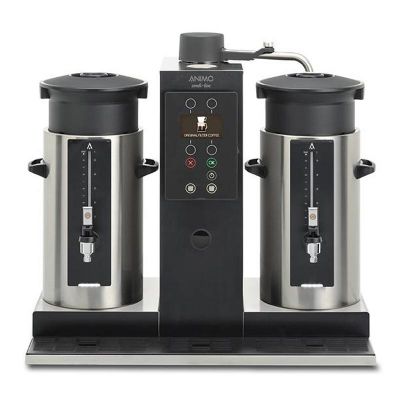
Product A
Animo ComBi-Line CB 2x5 Cylindrical Filter Coffee Machine, 10 L
This cylindrical filter coffee machine features a 10-liter capacity and 30-liter per hour output. It includes a digital interface, pre-programmable timer, and a double-walled stainless steel boiler for efficient brewing.
- Power Source
- Electric
- Voltage
- 230 V
- Power
- 3175 W
- Width
- 815 mm
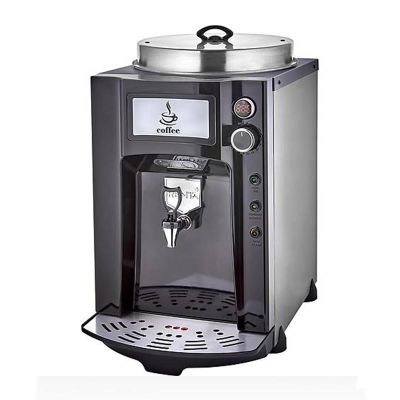
Product B
Remta R51 P Premium Filter Coffee Vending Machine, 12 L, 120 Cup Capacity
This premium filter coffee vending machine has a 12-liter capacity and serves up to 120 cups. It features a stainless steel interior, digital thermostat, and ergonomic metal spout for hygienic and durable use.
- Power Source
- Electric
- Voltage
- 220 V
- Power
- 2400 W
- Width
- 475 mm
On this page
- The two machines
- What actually separates them
- The space math
- Utilities and installation
- What the spec sheet hides
- Doors, drawers and service access
- Which kitchen each one fits
- Where they differ
- Strengths and weak spots
- Which one for which kitchen?
- A specialty café
- A hotel breakfast service
- A roastery or tasting bar
- Before you order
- Our call
- Questions we get asked
- Can the Remta R51 P be used as a water dispenser?
- What is the annual energy cost of the Animo ComBi-Line CB 2x5?
- Is the Animo ComBi-Line CB 2x5 suitable for small kitchens?
- Related comparisons
The two machines
| Product | Brand | Category | Key specs | |
|---|---|---|---|---|
| A | Animo ComBi-Line CB 2x5 Cylindrical Filter Coffee Machine, 10 L | Animo | Filter Coffee Machines | Power Source: Electric; Voltage: 230 V; Power: 3175 W |
| B | Remta R51 P Premium Filter Coffee Vending Machine, 12 L, 120 Cup Capacity | Remta | Filter Coffee Machines | Power Source: Electric; Voltage: 220 V; Power: 2400 W |
What actually separates them
The morning rush is not the time to measure a coffee machine against a counter. A barista needs a reliable pour, not a geometry lesson. When planning a new kitchen or retrofitting an existing one, the physical footprint of equipment dictates workflow efficiency. Two machines often compete for the same real estate, but their spatial requirements differ drastically.
This analysis compares the Animo ComBi-Line CB 2x5 Cylindrical Filter Coffee Machine, 10 L against the Remta R51 P Premium Filter Coffee Vending Machine, 12 L, 120 Cup Capacity. We rely strictly on manufacturer spec sheets to evaluate their dimensions, power loads, and installation constraints.
The space math
The Animo ComBi-Line CB 2x5 demands significant counter real estate. With a width of 815 mm and a depth of 470 mm, it occupies a footprint of 0.4 m². This is not a compact unit; it requires a dedicated section of the kitchen line. The Remta R51 P, by contrast, measures 475 mm wide and 300 mm deep, resulting in a compact 0.1 m² footprint. The Remta saves 340 mm of width and 170 mm of depth, a massive difference in a cramped kitchen.
Vertical space is equally critical. The Animo stands 700 mm tall, which may conflict with low-hanging shelves or ventilation hoods. When calculating box volume, the Animo requires 0.3 m³ of space, while the Remta needs only 0.1 m³. This density difference means the Animo is a substantial appliance, whereas the Remta is a space-efficient vending solution.
Utilities and installation
Power requirements differ substantially between the two units. The Animo ComBi-Line CB 2x5 has a connected load of 3.175 kW, while the Remta R51 P draws 2.4 kW. This 775 W difference might seem minor, but it impacts circuit sizing and breaker selection. The Animo operates on 230 V, whereas the Remta is rated for 220 V. Operators must verify their existing electrical infrastructure to ensure the circuit can handle the Animo’s higher load without tripping.
Water supply is another key differentiator. The Animo is designed for direct water line connection, which is essential for its 30 L/h output and 10 L container capacity. This setup ensures continuous brewing without manual refilling. The Remta R51 P has 12 L water tank, allowing for standalone operation. While the Remta offers flexibility, the Animo’s direct connection is superior for high-volume, uninterrupted service in busy cafes.
What the spec sheet hides
Spec sheets rarely list weight, but it matters for installation. The Remta R51 P has a net weight of 7.5 kg, making it lightweight and easy to move for cleaning. The Animo’s weight is not specified, but its double-walled stainless steel boiler and aluminum front casing suggest a heavier, more solid build. This weight difference affects how easily staff can pull the machine out for maintenance or deep cleaning.
Energy consumption estimates also vary. Based on an assumption of 8 hours per day, 300 days a year at full nameplate power, the Animo has an estimated annual energy use of 7,620 kWh. The Remta uses 5,760 kWh annually. This 1,860 kWh difference highlights the Animo’s higher energy intensity. However, real-world duty cycles are lower, so actual costs will depend on usage patterns and brew volume.
Doors, drawers and service access
Service access is important for long-term maintenance. The Animo ComBi-Line CB 2x5 features synthetic filter holders for easy maintenance and a touch interface with pre-programmable timer. Its aluminum front casing is durable but may require specific cleaning agents. The Remta R51 P includes a stainless steel interior and lid, which are easier to sanitize. Its ergonomic metal spout improves hygiene and user comfort, reducing the risk of contamination during high-volume service.
Clearance for operation is another hidden factor. The Animo’s 815 mm width allows for ample space around the spout, reducing splash risk. The Remta’s narrower 475 mm width requires careful placement to avoid spills. Additionally, the Animo’s 700 mm height may require staff to bend less, improving ergonomics. The Remta’s 580 mm height is lower, which might be better for staff with mobility issues or shorter stature.
Which kitchen each one fits
For a specialty café, the Animo ComBi-Line CB 2x5 is the better choice. Its 10 L capacity and 30 L/h output support high-volume service during rushes. The pre-infusion and pulse brewing technology ensure consistent quality, which is critical for specialty coffee. The Remta R51 P, while capable of 120 cups, lacks the advanced brewing features needed for specialty standards. The Animo’s direct water line connection also ensures consistent pressure and temperature.
For a hotel breakfast service, the Remta R51 P is the superior option. Its 12 L capacity and 120-cup output are sufficient for peak hours. The simple operation and digital thermostat make it easy for non-specialist staff to use. The Animo’s complexity and larger footprint are unnecessary for a hotel setting. The Remta’s compact size allows it to fit in a small pantry, freeing up space for other breakfast items.
Where they differ
| Specification | A | B | What it changes in practice |
|---|---|---|---|
| Footprint | 0.4 m² | 0.1 m² | The Animo requires four times the counter space, impacting kitchen layout and workflow efficiency. |
| Width | 815 mm | 475 mm | The Remta fits narrow counters where the Animo cannot, offering greater installation flexibility. |
| Power Load | 3.175 kW | 2.4 kW | The Animo requires a heavier electrical circuit, potentially necessitating upgrades to the kitchen’s power supply. |
| Water Supply | Direct Line | 12 L Tank | The Animo needs plumbing, while the Remta can operate standalone, simplifying installation in remote locations. |
Strengths and weak spots
| Strengths | Limitations | |
|---|---|---|
| A | - High-volume output of 30 L/h with direct water line connection for uninterrupted service. - Advanced brewing features like pre-infusion and pulse brewing for consistent specialty coffee quality. |
- Large footprint of 0.4 m² and 815 mm width makes it unsuitable for small or narrow kitchens. - Skip it if your kitchen has limited counter space or low overhead clearance, as it requires 700 mm height. |
| B | - Compact footprint of 0.1 m² and 475 mm width allows installation in tight spaces. - Lightweight at 7.5 kg and easy to clean with a stainless steel interior and ergonomic spout. |
- Lower power output and lack of advanced brewing features make it not suitable for specialty coffee service. - Skip it if you need high-volume continuous brewing, as the 12 L tank requires frequent refilling. |
Which one for which kitchen?
A specialty café
For a specialty café, consistency and quality are paramount. The Animo ComBi-Line CB 2x5 offers pre-infusion and pulse brewing, ensuring optimal extraction. Its 30 L/h output supports busy rushes without interruption. The Remta R51 P lacks these advanced features, making it less suitable for high-quality standards. The Animo’s direct water line connection also ensures consistent pressure.
Pick: Animo ComBi-Line CB 2x5 Cylindrical Filter Coffee Machine, 10 L
A hotel breakfast service
Hotel breakfasts require simplicity and high volume. The Remta R51 P’s 12 L capacity and 120-cup output are sufficient for peak hours. Its digital thermostat and easy operation make it ideal for non-specialist staff. The Animo ComBi-Line CB 2x5 is overkill for this setting, with its larger footprint and complex features unnecessary for a hotel pantry.
Pick: Remta R51 P Premium Filter Coffee Vending Machine, 12 L, 120 Cup Capacity
A roastery or tasting bar
Roasteries often serve small batches and need flexibility. The Remta R51 P’s 12 L tank allows for easy refilling and cleaning between batches. Its compact size fits well in a tasting bar environment. The Animo ComBi-Line CB 2x5’s large capacity and fixed setup are less adaptable to small, frequent batches. The Remta’s versatility makes it a better fit for this dynamic setting.
Pick: Remta R51 P Premium Filter Coffee Vending Machine, 12 L, 120 Cup Capacity
Before you order
- Confirm the supply phase with the dealer before ordering; neither spec sheet states it: Both machines require specific electrical phases, and incorrect installation can cause damage or void warranties.
- Verify the exact material of the Animo’s internal components: The spec sheet mentions a double-walled stainless steel boiler but does not specify the material of other internal parts, which affects durability and cleaning.
- Check the warranty period for both machines: Warranty terms vary by region and dealer, and longer coverage can reduce long-term ownership costs.
- Determine if a drain is required for the Animo ComBi-Line CB 2x5: Direct water line machines often require a drain for overflow or cleaning, which impacts kitchen plumbing design.
- Assess the noise level of both machines during operation: Noise levels are not specified, but they can affect staff comfort and customer experience in open-plan kitchens.
Our call
The choice between the Animo ComBi-Line CB 2x5 and the Remta R51 P hinges on space and service style. The Animo is a high-volume, specialty-grade machine requiring significant counter space and electrical capacity. It is ideal for dedicated coffee stations in busy cafes. The Remta is a compact, versatile vending solution perfect for hotels, offices, and tight spaces. Its lower power draw and ease of use make it a practical choice for high-volume, low-complexity service. Operators must prioritize their spatial constraints and service needs when deciding.
Questions we get asked
Can the Remta R51 P be used as a water dispenser?
Yes, the Remta R51 P is CE certified and can be used as a water dispenser, offering versatility beyond coffee service.
What is the annual energy cost of the Animo ComBi-Line CB 2x5?
Based on 8 hours/day and 300 days/year at full nameplate power, the Animo uses 7,620 kWh annually, but actual costs will vary with usage.
Is the Animo ComBi-Line CB 2x5 suitable for small kitchens?
No, the Animo’s 815 mm width and 0.4 m² footprint make it unsuitable for small or narrow kitchens; the Remta is a better fit.
Related comparisons
FindGastro Editorial · Commercial kitchen equipment editors
Author profile →